Boost Your Brand with our Custom Packaging!
Custom vial boxes are precision-engineered packaging solutions designed to protect, present, and brand glass or plastic vials used in pharmaceutical, cosmetic, essential oil, fragrance, and laboratory applications. They feature custom-fitted inserts, secure closures, and full branding capabilities available in cardboard, rigid board, kraft, and corrugated materials with options for regulatory printing, tamper-evident features, and premium surface finishes.

Get Your Custom Boxes Designed in Your Desired Shape, Size and Style

Get Your Custom Boxes Designed in Your Desired Shape, Size and Style

Get Your Custom Boxes Designed in Your Desired Shape, Size and Style
| Dimensions | All Custom Sizes & Shapes |
|---|---|
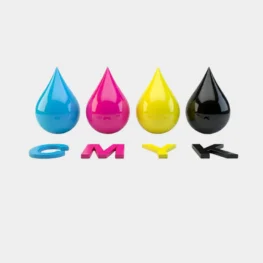
| Printing | CMYK, PMS, No Printing |
| Paper Stock | 10pt to 28pt (60lb to 400lb) Eco-Friendly Kraft, E-flute Corrugated, Bux Board, Cardstock |
| Quantities | 100 - 500,000 |
| Coating | Gloss, Matte, Spot UV |
| Default Process | Die Cutting, Gluing, Scoring, Perforation |
| Options | Custom Window Cut Out, Gold/Silver Foiling, Embossing, Raised Ink, PVC Sheet |
| Proof | Flat View, 3D Mock-up, Physical Sampling (On request) |
| Turn Around Time | 4–6 Business Days, Rush |
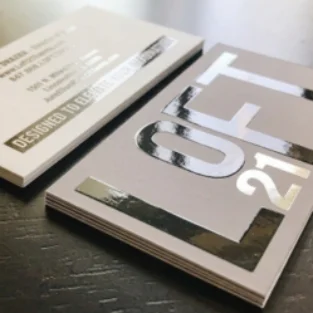
It is a popular choice for luxury and high-end product packaging. This coating delivers a silky, soft-touch texture, which adds a refined appearance and leaves a lasting impression of quality and exclusivity
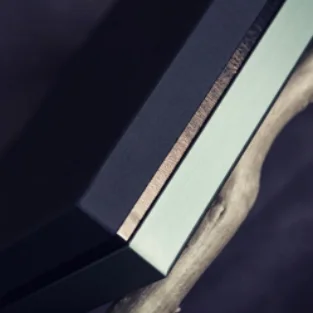
It is a popular choice for luxury packaging and corporate branding. This finishing method presses the design into the material, which creates an elegant dimensional effect and gives the packaging a refined, professional look.
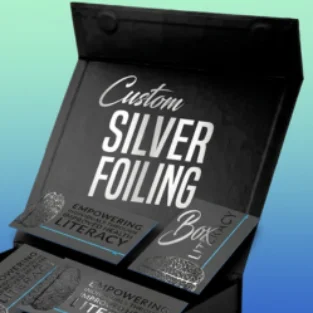
It is a popular choice for upscale product packaging and branding. This technique adds a reflective silver foil effect, which highlights important details and gives the packaging a sophisticated and eye-catching look.
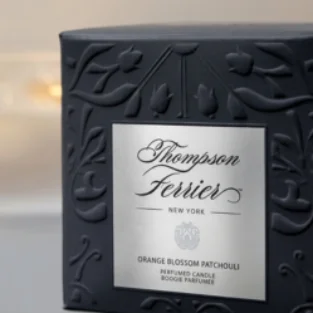
It is commonly used by brands looking to create a premium and tactile packaging experience. This technique raises selected design elements above the surface, which adds depth, texture, and a distinctive visual appeal to the packaging.

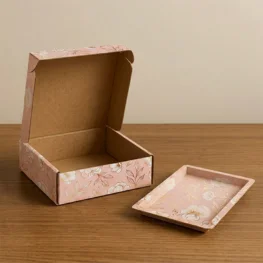
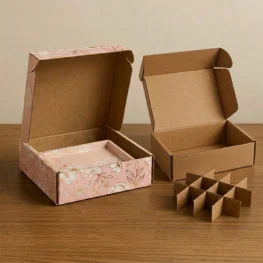

A vial is one of the most vulnerable products you can package. It’s small. It’s glass or sometimes thin plastic. It contains something concentrated, often expensive, sometimes temperature-sensitive. A single crack during shipping doesn’t just damage the product. It creates a safety risk, a customer service problem, a refund, a lost customer, and in pharmaceutical applications a potential compliance issue.
I’ve sat across the table from a cosmetic serum brand that was losing nearly 8% of every shipment to transit damage. Not because the carrier was rough. Because their packaging was wrong. Standard folding cartons with no internal support. Vials rattling against each other inside boxes that were technically the right size but functionally inadequate. Every broken vial cost them the product, the shipping, the replacement, and worst of all a piece of the customer’s trust they’d never fully recover.
Custom vial boxes exist because generic packaging wasn’t built for products this fragile, this valuable, or this demanding. They solve a problem that standard boxes create and they do it while building brand equity, meeting regulatory requirements, and creating customer experiences that justify premium price points.
This is a packaging category where getting it right matters more than in almost any other. And providers like One Custom Boxes have built specific expertise around exactly this challenge because vial packaging doesn’t forgive guesswork.
Custom vial boxes are precision-engineered packaging solutions designed to protect, present, and brand glass or plastic vials used in pharmaceutical, cosmetic, essential oil, fragrance, and laboratory applications. They feature custom-fitted inserts, secure closures, and full branding capabilities available in cardboard, rigid board, kraft, and corrugated materials with options for regulatory printing, tamper-evident features, and premium surface finishes.
Let me break that definition into what it actually means when you’re packaging real products for real customers.
A vial box isn’t just a small box. It’s a packaging system built around one fundamental truth: the product inside can break. Everything about the box the material thickness, the insert design, the closure mechanism, the dimensional tolerance either prevents that break or allows it to happen.
Here’s what custom vial packaging actually involves in practice:
The difference between a vial that arrives intact and one that arrives shattered is almost always the box it traveled in. That’s not a branding argument it’s a physics argument. And it’s where custom vial packaging earns its investment back on the very first shipment.
Let me tell you about two brands in the same product category because the contrast illustrates the custom vial packaging question better than any general argument.
Brand A sells a premium essential oil blend. Beautiful product. Exceptional sourcing. Their vial sits inside a generic white tuck-end box that’s roughly the right size. There’s no insert. The vial shifts when the box moves. The box has a printed label with the brand name and required information. It does the job technically.
Brand B sells a comparable essential oil at a similar price point. Their vial sits inside a rigid vial box with a matte black exterior, a debossed logo, and a custom foam insert that holds the vial snugly enough that you could shake the box and hear nothing. The interior is printed with usage instructions and a brand story. The box opens with a magnetic closure that creates a small, deliberate moment of anticipation.
Same product category. Similar product quality. Dramatically different customer perception.
Brand B charges 30% more. Brand B has higher repeat purchase rates. Brand B gets tagged in social media posts by customers who photograph the unboxing. Brand A gets occasional five-star reviews that mention the oil but never mention the packaging.
That gap between functional packaging and strategic packaging is where custom vial boxes create measurable business value.
Vials present a packaging challenge that most product categories don’t face: genuine breakage risk with genuine consequences. A cracked vial in a cosmetic shipment doesn’t just mean a refund. It means product leaking onto other items, potential skin contact with concentrated formulations, customer safety concerns, and a brand perception hit that extends well beyond the individual order.
In pharmaceutical applications, the stakes are even higher. A damaged vial can mean compromised medication, regulatory reporting requirements, and liability exposure that far exceeds the product’s retail value.
Secure vial packaging with custom-fitted inserts, appropriate material thickness, and structural closure mechanisms reduces transit damage rates from the industry-typical 5–8% range down to well under 1% for well-designed packaging programs. That damage reduction alone often pays for the entire packaging upgrade within the first quarter.
Industry professionals suggest that vial packaging should be designed around the worst-case transit scenario not the best case. The box needs to protect the vial when the carrier drops it, stacks heavy packages on top of it, or leaves it in a hot delivery vehicle for hours. Packaging that works under ideal conditions but fails under real-world shipping stress isn’t actually working.
Vial packaging crosses more industry boundaries than almost any other packaging category. Each industry brings different requirements and understanding those differences matters when specifying packaging.
Pharmaceutical vial boxes operate under the most rigorous requirements of any vial packaging application. Tamper-evident closures, child-resistant features, serialization codes, lot numbers, expiry dates, dosage information, and multilingual regulatory text all need space on the box and they need to be legible, accurate, and compliant with jurisdiction-specific regulations.
For nutraceutical brands supplements, vitamins, and wellness formulations in vial format the regulatory requirements are somewhat lighter but still substantial. The packaging needs to communicate legitimacy and safety in a category where consumer trust is hard-earned.
Serums, concentrates, facial oils, and ampoule-format treatments represent one of the fastest-growing segments in beauty retail and they all ship in vials. Cosmetic vial packaging needs to balance product protection with premium brand presentation, because these products often sit at high price points where the packaging must justify the cost before the customer experiences the product.
Luxury vial boxes with rigid construction, soft-touch finishes, and custom inserts have become standard expectations in the premium skincare space. Anything less, and the packaging creates a gap between the price point and the perceived value a gap competitors with better packaging will exploit.
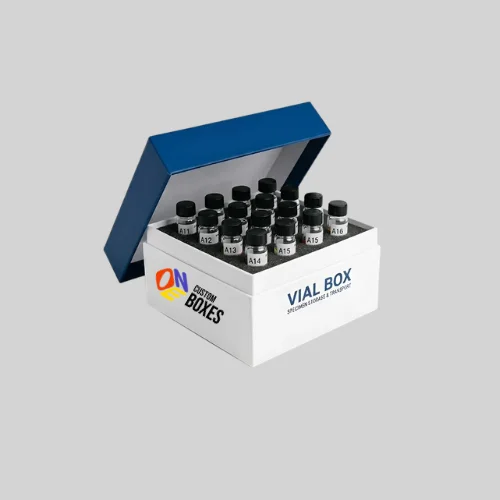
Essential oil brands face a unique combination of challenges: glass fragility, liquid contents, small product dimensions, and frequently multi-vial product sets that need to be packaged cohesively. Essential oil vial boxes with custom divider inserts solve all of these simultaneously, keeping individual vials separated and stationary while presenting the set as a unified brand experience.
Fragrance brands particularly in the sample and discovery set segment depend on vial packaging that’s premium enough to represent the brand despite the small product size. A 2ml fragrance vial in a well-designed rigid box communicates brand stature that the vial alone simply can’t.
The CBD category has matured rapidly from a packaging perspective. Early market entrants shipped in basic boxes. Brands competing effectively now use custom printed vial boxes that communicate product quality, regulatory compliance, and brand professionalism simultaneously because the category still faces consumer trust challenges that strong packaging directly addresses.
Clinical, diagnostic, and laboratory vials require packaging that prioritizes protection and compliance above all else. Corrugated vial boxes with precision inserts prevent cross-contamination, maintain sample integrity, and meet the chain-of-custody requirements that regulated laboratory environments demand.
Insight: Custom vial boxes serve industries from luxury beauty to clinical diagnostics but the core packaging principle is identical across all of them: protect what’s fragile, present what’s valuable, and communicate what the customer needs to trust.
The premium standard for luxury vial packaging. Thick chipboard construction communicates quality through structural weight and clean edges. Rigid vial boxes work particularly well for cosametic serums, fragrance sets, and any application where the packaging lives on the customer’s vanity or shelf after unboxing extending brand presence beyond the purchase moment.
Cardboard vial boxes deliver the best combination of print quality, production cost, and functional protection for standard retail applications. They support full-color printing, accept a range of surface finishes, and work reliably across retail distribution and direct-to-consumer channels. For brands operating across multiple SKUs at volume, cardboard remains the most economically practical format.
Kraft vial boxes suit brands positioning around natural, organic, or environmentally conscious values. The uncoated brown texture communicates authenticity in a way that synthetic materials can’t replicate. For essential oil brands, herbal tincture companies, and natural skincare lines, kraft packaging creates immediate alignment between product values and packaging presentation.
When protection during transit is the primary concern which it often should be for glass vials corrugated vial packaging provides maximum structural integrity. The fluted board construction absorbs impact and compression in ways that standard cardboard can’t match. For multi-vial shipments, fragile pharmaceutical products, or any application where transit damage risk is high, corrugated is the material that solves the problem.
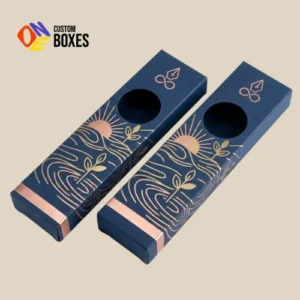
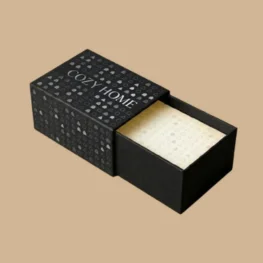
Window vial boxes feature die-cut openings that let customers see the vial’s shape, color, and label before opening. This format works well for retail environments where visual product appeal drives purchase decisions particularly for cosmetic products and essential oils where the liquid color itself is a selling point.
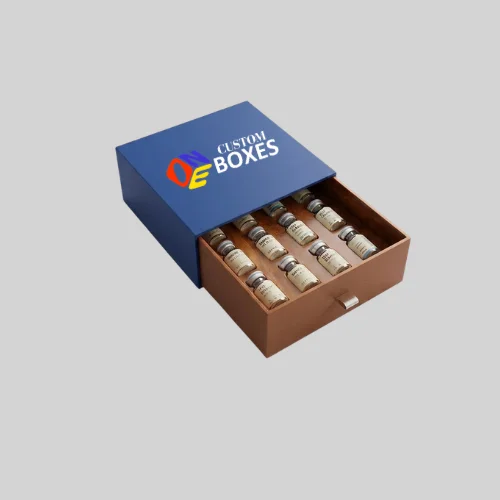
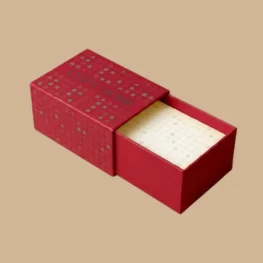
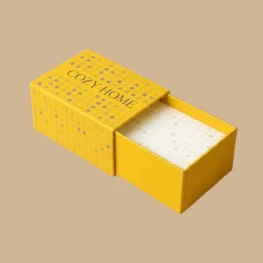
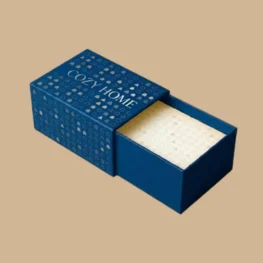
The sleeve-over-tray format offers an additional layer of both protection and branding. The outer sleeve handles visual brand communication across its full surface, while the inner tray provides structural support and product security. Sleeve vial packaging creates a deliberate reveal moment that transforms opening the box into a genuine brand experience.
| Finish | Effect on Perception | Best For |
|---|---|---|
| Matte lamination | Sophisticated, clean, premium feel | Skincare, wellness, pharmaceutical |
| Gloss coating | Color vibrancy and print protection | Retail, lifestyle, colorful brand identities |
| Soft-touch coating | Luxury tactile sensation | Premium beauty, fragrance, gift packaging |
| Spot UV | Visual contrast and design depth | Premium retail vial packaging |
| Embossing/debossing | Physical dimension and tactile brand experience | Luxury and clinical professional brands |
| Gold/silver foil stamping | Immediate luxury positioning signal | Premium cosmetic and fragrance vial boxes |
| Die-cut windows | Product visibility and purchase confidence | Essential oils, cosmetics, colored formulations |
| Custom foam/pulp inserts | Maximum protection and presentation control | All glass vial applications |
| Tamper-evident seals | Safety assurance and regulatory compliance | Pharmaceutical, nutraceutical, CBD |
Vial packaging decisions carry higher consequences than most other packaging categories. A wrong choice doesn’t just look bad it breaks product and damages brand trust. Here’s the framework that matters:
Sustainability Note: Eco-friendly vial boxes made from recycled or FSC-certified materials protect fragile products just as effectively as standard materials while supporting the environmental values that cosmetic, wellness, and natural product customers increasingly demand.
Vials hold some of the most valuable per-milliliter products in modern retail. Skincare serums that cost more than fine wine by volume. Essential oils extracted from thousands of plants to fill a single bottle. Pharmaceutical compounds that took years and millions to develop. Fragrances blended by artisans with decades of experience.
Custom vial boxes exist at the intersection of protection and presentation solving the very real problem of fragile product transit while building the brand equity that justifies premium pricing. From precision inserts that eliminate breakage, to rigid luxury formats that communicate brand stature, to eco-friendly materials that align with customer values every element of vial packaging contributes to whether the product arrives safely, sells effectively, and earns the customer’s trust for next time.
The brands getting this right treat their vial packaging as a strategic investment rather than a production cost. They design the insert before the exterior. They build regulatory requirements into the design brief before the first concept sketch. They match material to distribution reality rather than to the best-case scenario.
One Custom Boxes works with brands across pharmaceutical, cosmetic, essential oil, and specialty product categories to develop vial packaging that genuinely solves the fragility problem while building the brand presentation that premium products deserve.
Because in the vial packaging space, “good enough” packaging isn’t. The product is too valuable, too fragile, and too important to trust to a box that wasn’t built for it.
The best material depends on your brand positioning and budget. Rigid chipboard is ideal for luxury wig packaging because it’s durable and premium in feel. Standard cardboard wig boxes work well for retail and everyday use they’re lightweight and easily customizable. For eco-conscious brands, kraft paper offers excellent eco-friendly wig box options that resonate with sustainability-minded customers. The key is to match the material to your customer’s expectations and the shipping demands of your product.
Yes, many custom wig boxes are made from sustainable packaging solutions, including recycled cardboard, FSC-certified paper, and soy-based inks. When working with a packaging provider, simply request eco-friendly wig boxes. The environmental footprint of your hair product packaging is increasingly important to consumers, and choosing recyclable or biodegradable materials can actually strengthen your brand image.
Custom-printed wig boxes give you complete control over how your brand looks at the point of sale. Your logo, color palette, typography, and visual story all appear on the box making it a walking advertisement for your brand. In real-world retail, branded hair packaging increases recognition and builds trust. Online, it creates the kind of polished product display packaging that encourages customers to share unboxing experiences, driving organic social media visibility.
In most cases, yes. Wigs are delicate and can shift, tangle, or lose shape during transit or storage. Custom inserts foam, cardboard, or fabric hold the wig securely in place inside the box and help maintain its original form. For premium hair extension packaging especially, inserts are a strong signal of quality and care that customers notice immediately upon opening.
Minimum order quantities (MOQs) vary depending on the type of custom wig box, the printing method, and the supplier. For standard cardboard wig boxes with digital printing, MOQs can be as low as 50–100 units. Wholesale wig boxes with offset printing usually start from 500 units and above. Rigid boxes and luxury wig packaging tend to have slightly higher MOQs due to the production process involved. It’s always worth discussing your volume needs upfront to find the most cost-effective option for your business.