Boost Your Brand with our Custom Packaging!
You’re here because you need cosmetic packaging. Maybe you’re launching a new beauty brand. Maybe you’ve been selling for years and your current boxes look tired. Maybe you’re switching from generic stock packaging to something custom because you’ve realized the box matters just as much as the formula inside.
Whatever brought you here this page is going to be actually useful. Not just “we make great boxes, order now” like every other packaging website. We’re going to walk you through everything you need to know before spending a single dollar on cosmetic packaging.
What materials make sense for YOUR specific product. What finishes actually move the needle versus what’s just wasting money. What sizes work. What mistakes to avoid. What it costs and why. And yeah how to order from us when you’re ready.
5,000+ brands big and small 🥰 love us! ★ ★ ★ ★ ★ 5.0 Google Reviews
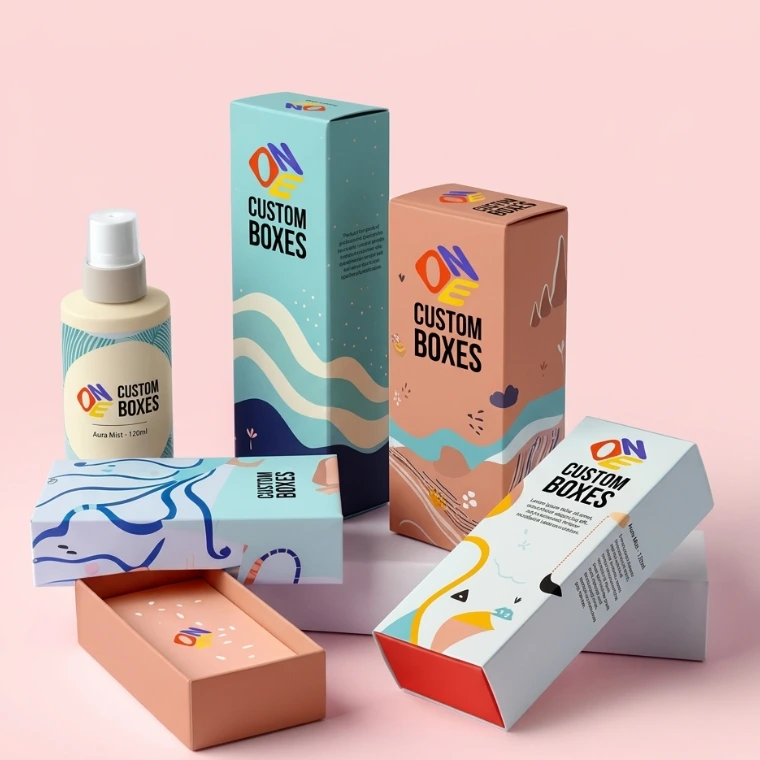
This is the first question and most packaging websites skip it entirely. They throw a generic page at you and hope you figure it out yourself.
Different cosmetic products need different packaging approaches. A lipstick box and a skincare serum box aren’t even in the same conversation. Here’s how we break it down:
This is probably the most important decision you’ll make and the one with the least guidance available online. So here’s a straightforward comparison:
| Feature | Cardboard (SBS) | Kraft | Rigid Board | Corrugated |
| Best for | Retail cosmetic boxes | Natural/organic brands | Luxury/premium lines | Shipping & mailers |
| Thickness | 300-450 GSM | 300-400 GSM | 1000-2000 GSM | Varies by wall type |
| Print quality | Excellent smooth surface takes ink beautifully | Good but natural brown color affects color output | Excellent wrapped in printable paper | Good slightly textured surface |
| Feel in hand | Light to medium weight | Light, natural texture | Heavy, substantial, premium | Light but sturdy |
| Durability | Moderate | Moderate | Very high | High |
| Cost | $$ | $ | $$$$ | $$ |
| Eco-friendliness | Recyclable | Recyclable + biodegradable | Recyclable (varies by components) | Highly recyclable |
| Brand positioning | Mid-range to premium | Natural, organic, clean | Luxury, high-end | Not typically customer-facing |
Every packaging company lists the same finishes matte, gloss, spot UV, foil stamping, embossing. But nobody tells you WHEN each one makes sense and when you’re just adding cost for no real return.
Here’s the honest breakdown:
What it does: Smooth, non-shiny surface with a subtle, sophisticated feel.
When to use it: Premium skincare, minimalist branding, clinical/dermatological positioning. Matte says “we’re serious about our product, not just flashy.”
When to skip it: If your brand is playful, bold, or color-heavy. Matte can dull vibrant colors slightly.
What it does: Shiny, reflective surface that makes colors pop.
When to use it: Bold, colorful cosmetic brands. Nail polish boxes. Playful, youthful brand identities. Products that rely on vibrant visuals to attract attention.
When to skip it: Luxury positioning. Gloss can feel “cheap” on high-end products sounds counterintuitive, but it’s true in the cosmetics world.
What it does: Velvety, almost suede-like texture. People literally can’t stop touching it.
When to use it: Anytime you want the box to feel expensive. This single finish can elevate a $2 box to a $10 perceived value. It’s the most effective “luxury signal” in packaging.
When to skip it: Very tight budgets. It’s the most expensive lamination option. Also not ideal for boxes that will be handled extensively in wet environments (bathroom products) it can show fingerprints and water spots.
What it does: Applies glossy coating to specific areas (usually logos or design elements) while the rest of the box stays matte. Creates visual contrast.
When to use it: When you want your logo or brand name to literally shine. The contrast between matte background and glossy logo is eye-catching without being over the top.
When to skip it: If your design is very busy or complex. Spot UV works best with clean, simple designs where the contrast is immediately noticeable.
What it does: Metallic foil applied to specific areas using heat and pressure. Creates a genuine metallic shine that printing alone can’t replicate.
When to use it: Luxury cosmetics, perfume boxes, premium skincare. Gold foil on a dark box is probably the most universally recognized “luxury packaging” signal in the beauty industry. Rose gold foil is trending heavily for feminine beauty brands.
When to skip it: Mass-market, value-oriented products where the foil cost doesn’t align with the price point.
What it does: Raises (embossing) or presses (debossing) specific areas of the box to create a 3D texture.
When to use it: Logos, brand names, or patterns where you want a tactile element. Combined with foil stamping, it’s the ultimate luxury finish. Also great as a standalone on kraft boxes debossed logo on brown kraft is simple but stunning.
When to skip it: Very small text or intricate details they don’t emboss well. Best for logos, icons, and larger type.
Nobody talks about this. Every packaging website tells you what TO do. Here’s what NOT to do based on what we’ve seen working with thousands of beauty brands:
The cheapest box isn’t saving you money if it makes your $40 serum look like a $12 impulse buy. Material choice should be driven by brand positioning, not just budget.
The exterior gets someone to open it. The interior determines how they feel about it. An all-white, blank interior is a missed opportunity. Even a single brand color or a small “thank you” message printed inside changes the unboxing experience dramatically.
More isn’t more. When every surface of your box is covered in text, graphics, patterns, and icons nothing stands out. The best cosmetic packaging has breathing room. White space is your friend.
A product swimming inside an oversized box feels like the company doesn’t pay attention to details. A product jammed into a too-tight box feels cheap and frustrating to open. Size your box to your product 2-3mm clearance on each side.
If your moisturizer box is matte black with gold foil but your cleanser box is glossy white with blue text your brand looks disjointed. Customers should be able to identify your products as belonging together even from a distance. Create a packaging system, not individual boxes.
A box that looks perfect in a digital mockup might not hold up in real life. Paper stock might be too thin. The closure might not stay shut. The box might warp in humidity. Always order a physical sample before committing to a full production run.
In the US, cosmetic products have specific labeling requirements set by the FDA:
Missing required information doesn’t just look unprofessional it can result in regulatory action. Make sure your packaging design accounts for all required label elements.
The beauty packaging world moves fast. Here’s what’s actually trending not just what looks good on Pinterest, but what’s driving purchasing behavior:
Clean lines. Limited color palettes. Lots of white space. Typography-driven designs. Brands like The Ordinary proved that stripping away the visual noise doesn’t make you look “cheap” it makes you look confident. Minimalist cosmetic boxes with one accent finish (a single foil-stamped logo, for example) are outperforming busy, multi-color designs.
Two years ago, eco-friendly packaging was a differentiator. Now it’s baseline. Consumers especially Gen Z and Millennial beauty buyers expect recyclable materials and responsible printing as standard. Brands still using non-recyclable packaging are starting to face backlash.
The soft-touch finish has taken over premium cosmetic packaging. That velvet-like feel creates an immediate emotional response. Customers associate it with luxury, quality, and care. If you’re selling anything above the drugstore price point, soft-touch lamination should be on your radar.
Not just a trend a movement. Brands offering refillable cosmetic containers with outer packaging designed to be kept and reused are gaining serious traction. Your primary box becomes a permanent brand touchpoint in the customer’s home. Something to consider for your packaging strategy.
Single-color box with one metallic accent. All black with silver foil. All white with gold foil. All navy with rose gold foil. This combination dominates the premium beauty space right now because it’s striking, elegant, and photographs beautifully for e-commerce and social media.
Letting the product speak for itself. Die-cut windows that show the actual product color, texture, or design are increasingly popular especially for lipsticks, nail polishes, and cream products where color is a purchasing factor.
Nobody in our industry talks about pricing openly. Every website says “affordable” or “competitive rates” but nobody explains what actually drives cost. Here’s the transparent breakdown:
| Factor | How It Affects Price |
| Material type | Kraft is cheapest. Cardboard is mid-range. Rigid is most expensive. |
| Material thickness (GSM) | Higher GSM = more material = higher cost per box |
| Box size | Larger boxes use more material. Simple math. |
| Print colors | Full-color CMYK is standard pricing. Pantone matching adds slightly. |
| Finishing | Basic lamination is affordable. Foil stamping, spot UV, embossing each add cost. Stacking multiple finishes increases price significantly. |
| Quantity | Higher quantities = lower per-unit cost. Significantly. A box that costs $3.00 at 100 units might cost $0.80 at 5,000 units. |
| Custom inserts | Foam inserts, cardboard dividers, or custom-molded trays add cost but add perceived value. |
| Structural complexity | Standard tuck-end boxes are cheapest. Magnetic closures, drawer-style, sleeve boxes cost more due to additional assembly. |
| Interior printing | Printing inside the box (full-color interior) adds cost but creates a dramatically better unboxing experience. |
These are ballpark figures. Actual pricing depends on your specific dimensions, design, and order quantity. Get a free custom quote for accurate pricing.
It depends entirely on your product and brand positioning. For most retail cosmetic products, 350-400 GSM SBS (solid bleached sulfate) cardboard is the industry standard it’s versatile, prints beautifully, and works with all finishing options. For luxury lines, rigid board is the go-to. For natural or organic brands, kraft communicates that eco-conscious identity perfectly.
Prices range from as low as $0.25 per unit for simple kraft boxes at high volume to $8.00+ per unit for luxury rigid boxes with premium finishes. The biggest cost drivers are material type, quantity, and finishing options. We offer free quotes with no obligation just tell us what you need.
We have no minimum order requirement. You can order as few as 50 boxes. This is ideal for new brands testing product-market fit, limited edition launches, or sampling different packaging options before committing to large volumes.
Standard production is 8-10 business days after design approval. Rush production is available for time-sensitive orders. Shipping within the USA is free.
Absolutely. If you have a complete design file, we’ll work with it. If you have a rough concept, we’ll refine it. If you have nothing and need design from scratch, our team will create it no charge for design support. We provide free 3D mockups before production so you see exactly what you’re getting.
Our boxes can accommodate all FDA-required labeling for cosmetic products. We’ll help you ensure the right information is placed correctly on your packaging. However, final regulatory compliance responsibility lies with the brand we strongly recommend consulting FDA cosmetic labeling guidelines or a regulatory consultant for your specific product category.
Yes. 100% of our materials are recyclable. We use soy-based inks and offer eco-friendly finishing options. For brands where sustainability is a core value, we offer kraft and recycled cardboard options with biodegradable lamination alternatives.
Yes. We provide physical samples and free 3D digital mockups so you can see, touch, and evaluate the box before placing a full order. We always recommend sampling especially if you’re ordering a new box style or trying a new material.
We accept AI (Adobe Illustrator), PDF, PSD, and EPS files at 300 DPI minimum resolution with CMYK color mode. If you don’t have professional design files, our team can create them for you based on your brand guidelines, references, or concepts.
Yes. Volume discounts are available and scale with order size. The more you order, the lower the per-unit cost. Contact us for a tiered pricing quote based on your projected volumes.
You’ve done the research. You understand your options. You know what material fits your product, what finishes align with your brand, and what pitfalls to avoid.
Now it’s just about making it happen.
Here’s how:
No minimums. No hidden fees. No generic templates. Just custom cosmetic packaging built specifically for your brand.
Get your free quote now.
At the core of every partnership we forge is quality and trust—here’s what our clients have to say about working with us.