
Boost Your Brand with our Custom Packaging!
You’re here because you sell a food or beverage product and you need packaging that does more than just hold it. Maybe you’re launching a new snack brand and you need boxes that look professional enough to sit on a grocery shelf next to brands that have been there for decades. Maybe you run a bakery and your current packaging doesn’t match the quality of what’s inside. Maybe you sell beverages, sauces, coffee, tea, or supplements and you’re tired of generic stock boxes that make your product blend into the background.
5,000+ brands big and small 🥰 love us! ★ ★ ★ ★ ★ 5.0 Google Reviews
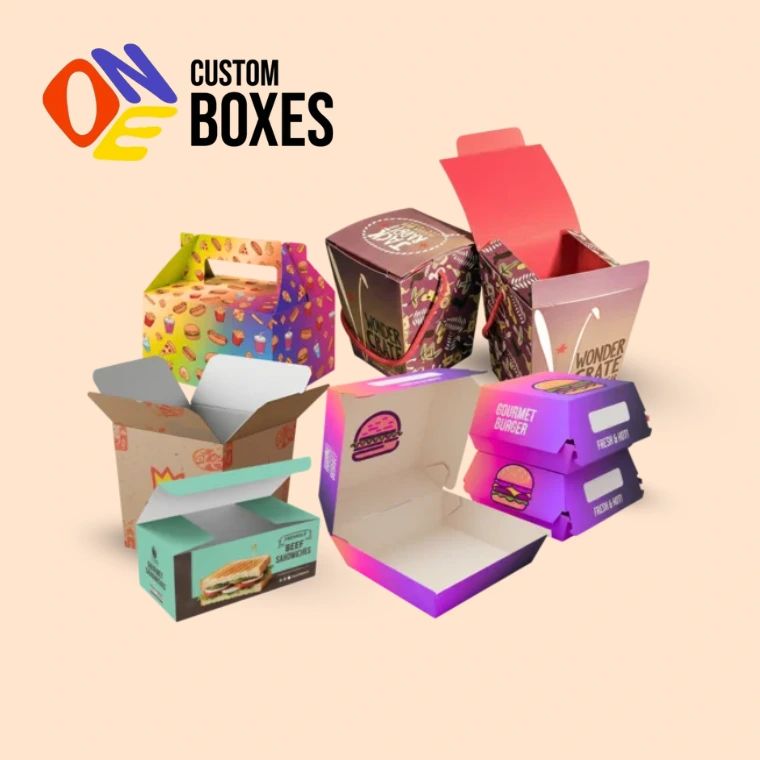
You’re here because you sell a food or beverage product and you need packaging that does more than just hold it. Maybe you’re launching a new snack brand and you need boxes that look professional enough to sit on a grocery shelf next to brands that have been there for decades. Maybe you run a bakery and your current packaging doesn’t match the quality of what’s inside. Maybe you sell beverages, sauces, coffee, tea, or supplements and you’re tired of generic stock boxes that make your product blend into the background.
Whatever your situation, food packaging is different from every other type of packaging. It has rules. FDA rules, food-safety rules, labeling rules, material rules. Get any of them wrong and you’re not just losing sales, you’re risking product recalls and legal trouble.
This page covers everything you actually need to know. What materials are food-safe. What FDA labeling is required. What box styles work for specific food products. What it costs. What mistakes to avoid. And what’s trending in food packaging right now. Real information, not marketing fluff.
Let’s get into it.
This is the starting point that most packaging websites skip completely. They show you a gallery of pretty boxes and hope you figure out the rest yourself. But a chocolate box and a frozen meal box have completely different requirements. The material, the coating, the closure, the inserts, the labeling, the food-safety certifications, all of it depends on what you’re actually putting inside.
Here’s the breakdown by product type:
Typical Sizes:
Best Material: Food-grade SBS cardboard (300-400 GSM) with grease-resistant coating on the interior. Kraft is popular for artisan bakeries going for that rustic, handcrafted aesthetic.
Recommended Features: Window cutout is almost mandatory for bakery products. Customers want to see what they’re buying, especially for decorated cakes and cupcakes. Clear PET window film or open window (for immediate-consumption items). Interior dividers for cupcakes to prevent movement and damage.
Key Consideration: Grease and moisture are your enemies. Baked goods release steam and oils that will soak through uncoated cardboard within hours, making the box look stained and unappealing. Always use grease-resistant interior coatings. For very oily items like donuts, consider a food-safe PE (polyethylene) coating or a grease-proof liner.
Typical Sizes:
Best Material: Rigid board for premium/gift chocolates. The weight and structure of a rigid box communicates luxury instantly. 350-400 GSM SBS cardboard for mid-range. Kraft with window for artisan/bean-to-bar brands.
Recommended Features: Custom cavity inserts (thermoformed trays or cardboard dividers) to hold each piece individually. Prevents chocolates from touching each other, shifting during transport, or getting damaged. Foil stamping and embossing for gift-oriented brands. Magnetic closure or ribbon-pull for premium unboxing experience.
Key Consideration: Chocolate is heat-sensitive. If your distribution involves warm climates or summer shipping, your packaging needs to accommodate insulated liners or cold packs. Design your box dimensions with this extra layer in mind. Also, chocolates absorb odors easily. Make sure your packaging materials, inks, and adhesives are low-odor and food-safe certified.
Typical Sizes:
Best Material: Kraft is the dominant aesthetic in specialty coffee. It communicates craft, origin-focused sourcing, and artisan production. SBS cardboard for tea brands going for a cleaner, more refined look. Corrugated for shipping boxes containing multiple units.
Recommended Features: Resealable closures or tuck-flap designs that customers can open and close repeatedly (especially for tea boxes with multiple sachets). Degassing valve accommodation for fresh-roasted coffee bags (the box needs a small vent or clearance for the one-way valve on the bag). Interior barriers to protect against moisture and preserve freshness.
Key Consideration: Coffee and tea are aroma products. The packaging should preserve the scent, not contaminate it. Use food-grade, low-migration inks and odor-neutral adhesives. If the product isn’t sealed inside an inner bag, your box needs a food-safe barrier layer (PE coating, foil lamination, or food-grade wax coating) to prevent moisture and oxygen from degrading the product.
Typical Sizes:
Best Material: SBS cardboard (350 GSM) for retail shelf boxes. Corrugated for subscription and multi-pack shipping boxes. Kraft for “natural” or “clean label” snack brands.
Recommended Features: Shelf-ready packaging (SRP) trays if selling through major retail chains. Tear-open perforations for easy access. Bold, full-color printing that competes on crowded snack aisles.
Key Consideration: Snack aisles in grocery stores are the most competitive visual environment in retail. Your box is sitting next to brands with million-dollar design budgets. You cannot afford bland packaging here. Invest in professional design, high-quality printing, and finishing that makes your box pop on shelf. Also, most snack products inside the box are in a sealed inner bag, so food-contact requirements are typically on the inner packaging, not the outer box. But if the box itself contacts food directly, it must be food-grade.
Typical Sizes:
Best Material: Rigid board for premium wine and spirits gift packaging. E-flute corrugated for multi-pack carriers that need to support bottle weight. SBS cardboard for single-bottle retail boxes. Kraft for craft brewery and artisan beverage brands.
Recommended Features: Internal dividers or cells for multi-bottle carriers. Handle cutouts or built-in carrying handles for convenience. Custom inserts (foam, molded pulp, or cardboard) for glass bottle protection. Window cutouts for bottles with distinctive label designs worth showing.
Key Consideration: Weight is the primary engineering challenge with beverage packaging. Glass bottles are heavy. A 6-pack of craft beer in glass bottles weighs 6 to 8 pounds. Your carrier box needs to support that weight from the bottom AND from the handle without tearing, buckling, or catastrophically failing when a customer picks it up. We use E-flute or B-flute corrugated with reinforced handles and double-layer bottoms for beverage carriers. Always test with actual filled bottles before committing to production.
Typical Sizes:
Best Material: SBS cardboard with polyethylene (PE) coating or clay-coated newsback (CCNB). The coating is critical because it prevents moisture from condensation (freezing and thawing cycles) from weakening the cardboard structure.
Recommended Features: High-gloss coating for freezer visibility (matte finishes tend to frost over and obscure graphics in freezer environments). Full-color printing with large, clear food photography. Nutritional panel and ingredient list placement optimized for the specific box structure.
Key Consideration: Frozen food boxes live in one of the harshest environments in retail. Constant sub-zero temperatures, moisture from door opening and closing, condensation during restocking, and physical handling by customers who are wearing gloves or have wet hands. Your box material must withstand freeze-thaw cycles without delaminating, warping, or losing structural integrity. Standard uncoated cardboard will fail in a freezer within days. PE-coated or wax-coated SBS is the industry standard for a reason.
Typical Sizes:
Best Material: 350-400 GSM SBS cardboard for retail. Rigid board for gift sets. Kraft for artisan, small-batch, farm-to-table brands.
Recommended Features: Custom inserts to hold bottles or jars securely. Window cutouts to showcase distinctive bottle shapes or label designs. Tuck-end closures for retail boxes. Magnetic or lift-off lids for gift sets.
Key Consideration: Glass bottles of sauces, oils, and condiments can leak if not sealed properly by the manufacturer. Your box needs to either accommodate a sealed inner bag/wrap or use interior coatings that resist liquid damage. Nothing ruins a premium packaging experience faster than a box with oil stains soaking through from the inside.
Typical Sizes:
Best Material: Corrugated cardboard (B-flute or C-flute) with insulation liner compatibility. These boxes need to survive shipping, maintain temperature (often with ice packs or insulated liners), and still look branded and appealing when the customer opens them.
Recommended Features: Easy-open tear strips or perforations. Interior printing for branded unboxing experience. Structural design that accommodates insulated liners and cold packs. Ventilation considerations for produce-based kits.
Key Consideration: Meal kit boxes serve double duty as both shipping containers and brand experiences. The exterior needs to survive FedEx or UPS handling (drops, stacking, weather exposure). The interior needs to create a premium unboxing moment that justifies the subscription price. These are competing requirements, and solving both simultaneously requires careful material selection and structural engineering.
| Feature | SBS Cardboard | Kraft | Corrugated | Rigid Board |
| Best For | Retail food boxes, frozen foods, bakery | Artisan, organic, natural brands | Shipping, carriers, meal kits | Premium gift sets, luxury food |
| Food-Safe Options | PE coating, wax coating, grease-resistant | Food-grade coatings available | Food-grade liners available | Food-safe wraps and inserts |
| Moisture Resistance | Excellent (with PE coating) | Low (uncoated), moderate (coated) | Moderate | Good (with coating) |
| Grease Resistance | Excellent (with coating) | Low (uncoated), good (coated) | Low | Good (with coating) |
| Print Quality | Excellent | Good (brown base affects colors) | Good (litho-lam: excellent) | Excellent |
| Structural Strength | Moderate | Moderate | High to Very High | Very High |
| Freezer Compatible | Yes (with PE/wax coating) | No (not recommended) | Limited | No (not recommended) |
| Eco-Friendliness | Recyclable | Recyclable + Biodegradable | Highly Recyclable | Recyclable (varies) |
| Cost | $$ | $ | $$ | $$$$ |
Selling baked goods at a farmers market or local shop?
Kraft with window cutout. Natural look, affordable, customers love it.
Selling packaged snacks on grocery shelves?
SBS cardboard (350 GSM) with full-color printing and gloss lamination for shelf pop.
Selling frozen meals or frozen desserts?
PE-coated SBS cardboard. Non-negotiable for freezer performance.
Selling premium chocolates or gift food?
Rigid board with custom inserts, foil stamping, and magnetic or lift-off closure.
Selling craft beverages (beer, kombucha, juice)?
Kraft or printed corrugated carriers. Handle reinforcement is critical.
Selling coffee or tea?
Kraft box for specialty/artisan positioning. White SBS cardboard for tea brands going refined and elegant.
Running a meal kit or food subscription?
Corrugated box (B or C flute) with branded printing and insulation compatibility.
This is where food packaging gets serious. The FDA has specific labeling requirements for food products, and your packaging needs to accommodate all of them. Missing required information can result in product recalls, fines, or being pulled from retail shelves.
| Required Element | Details |
| Statement of Identity | Common name of the food (e.g., “Chocolate Chip Cookies,” “Organic Green Tea”) |
| Net Quantity of Contents | Weight, volume, or count. Must be in both metric and US customary units. Placed in the bottom 30% of the principal display panel. |
| Nutrition Facts Panel | Standardized format showing serving size, calories, nutrients, % daily values. Required for most packaged foods. |
| Ingredient List | All ingredients in descending order of predominance by weight. Must include sub-ingredients of composite ingredients. |
| Allergen Declaration | Must declare the presence of major allergens: milk, eggs, fish, shellfish, tree nuts, peanuts, wheat, soybeans, sesame. |
| Manufacturer/Distributor Info | Name and address of the manufacturer, packer, or distributor. |
| Country of Origin | Required for imported food products. |
| Date Labeling | “Best by,” “Use by,” or “Sell by” dates. Not federally mandated for most products but required by many states and retailers. |
| Safe Handling Instructions | Required for certain products like raw meat and poultry. |
| Organic Certification | If claiming organic, must be USDA certified and display the USDA Organic seal appropriately. |
| Kosher/Halal Certification | If claiming certified, must display the appropriate certification mark. |
FDA labeling requirements take up significant space on your food box. Before you finalize your box dimensions, map out where everything goes:
Principal Display Panel (PDP): The front of your box. Must include the statement of identity and net quantity. This is also where your brand logo, product photography, and key marketing messages live. Space is limited, prioritize wisely.
Information Panel: The panel immediately to the right of the PDP (when facing the PDP). Must include Nutrition Facts, ingredient list, allergen statement, and manufacturer information. On small boxes, this panel fills up fast. If your ingredient list is long, you may need to increase box dimensions or reduce font size (but not below FDA minimum requirements, which is 1/16 inch for most required information).
Common Mistake: Designing a beautiful box first and then trying to fit all required labeling into whatever space is left. This results in cramped, hard-to-read information panels that look unprofessional and may violate FDA font size minimums. Always design your labeling layout FIRST, then build your visual design around it.
What makes an ink “food-safe”?
Food-safe inks are formulated with ingredients that meet FDA regulations for food contact surfaces. They have low migration characteristics, meaning the ink components don’t transfer from the packaging to the food product.
Types we use:
Important distinction: There’s a difference between “direct food contact” and “indirect food contact.” If the printed surface of your box touches the food directly (like the interior of a bakery box), the ink MUST be food-contact compliant. If your food is in a sealed inner wrapper and the printed box is only the outer packaging, standard food-safe inks for indirect contact are sufficient.
| Coating Type | Purpose | Best For | Food Contact Safe? |
| PE (Polyethylene) Coating | Moisture and grease barrier | Frozen foods, wet foods, greasy items | Yes |
| Wax Coating | Moisture resistance | Frozen foods, refrigerated items | Yes |
| Grease-Resistant Coating | Prevents oil soak-through | Bakery, fried foods, pizza boxes | Yes |
| Aqueous Coating | Surface protection and light moisture resistance | General food retail boxes | Yes (food-grade formulation) |
| Water-Based Varnish | Light protective layer | Dry food boxes, tea boxes, cereal boxes | Yes |
| UV Coating | High-gloss surface protection | Retail food boxes (non-contact surfaces) | Indirect contact only |
| Standard Lamination | Surface protection | Outer packaging only | Indirect contact only |
The glue holding your food box together also needs to be food-safe if it’s on a surface that contacts or could contact the food product. We use food-grade adhesives that meet FDA 21 CFR 175.105 requirements for adhesives used in food packaging. This is a detail most packaging companies don’t mention and many don’t actually comply with. Ask about it.
Best for: Snack boxes, candy packaging, frozen food boxes, any product competing in bright, visually aggressive retail environments. Gloss makes colors pop and food photography look appetizing. High-quality food imagery under gloss lamination looks almost three-dimensional on a shelf.
Avoid for: Organic, natural, or “clean label” brands where gloss feels inconsistent with the brand identity. Also avoid for direct food-contact surfaces unless using food-safe lamination.
Best for: Premium food brands, artisan products, tea packaging, specialty sauces, and any product positioning itself as sophisticated or upscale. Matte finishes communicate restraint, quality, and confidence.
Avoid for: Freezer packaging (matte surfaces frost over more noticeably than gloss, obscuring your graphics in the freezer case).
Best for: Highlighting specific design elements on food boxes. Your logo in glossy spot UV on a matte background. A food photograph with spot UV to make it glisten while the rest of the box stays matte. Very effective for premium food gift boxes.
Avoid for: Boxes with very busy designs where spot UV contrast gets lost visually.
Best for: Premium food gifts, luxury chocolate boxes, high-end tea and coffee packaging, wine and spirits boxes. Gold foil on a dark background immediately signals “gift worthy” and “premium quality.”
Avoid for: Mass-market food products where the foil cost doesn’t align with the price point. Nobody expects foil stamping on a $3 box of crackers.
Best for: Brand logos, product names, or patterns on premium food packaging. A debossed logo on a kraft coffee box adds tactile elegance without adding visual noise. Combined with foil stamping on rigid chocolate boxes, it’s the gold standard for luxury food packaging.
Avoid for: Thin cardboard (below 300 GSM). The embossing process requires material thickness to hold the impression without tearing or warping.
Best for: High-end food gift packaging, premium chocolate, specialty spirits. Creates that velvety texture that feels expensive.
Avoid for: Any food packaging that gets handled with wet, greasy, or dirty hands. Soft-touch shows fingerprints, water marks, and grease stains prominently. In a bakery environment or a grocery store where customers handle boxes with wet hands from produce sections, soft-touch is a poor choice.
Windows on food boxes deserve their own section because they’re one of the most powerful conversion tools in food packaging, and also one of the most commonly done wrong.
Food is inherently visual. People eat with their eyes first. A closed box forces customers to trust your food photography and brand reputation. A windowed box lets the actual product do the convincing. For bakeries, chocolatiers, cookie brands, and artisan food makers, the product IS the marketing. Let it show.
| Window Type | Material | Best For | Food Contact Safe? | Eco-Friendly? |
| PET Film | Clear polyester film | Most food products, excellent clarity | Yes (food-grade PET) | Recyclable (but must be separated) |
| PLA Film | Polylactic acid (corn-based bioplastic) | Eco-conscious brands | Yes | Compostable (industrial facilities) |
| Acetate | Cellulose-based film | Premium food gifts | Yes | Biodegradable |
| Glassine | Translucent paper-based material | Baked goods, pastries | Yes | Recyclable + Compostable |
| Open Window (No Film) | No material, just a die-cut opening | Immediate-consumption baked goods, farmers market items | N/A | Zero waste |
Show the best angle of your product. A cookie box window should show the top surface of the cookies (the pretty side), not the sides or bottoms. A cake box window should show the decorated top or the most visually appealing angle.
Size the window appropriately. Too small and customers can’t see enough to be convinced. Too large and the box loses structural integrity. General rule: window should be 25% to 40% of the panel surface area for optimal balance between visibility and structure.
Don’t let products shift behind the window. A window that shows an empty corner of the box because the product slid to the other side during transport defeats the entire purpose. Use inserts, dividers, or sizing to keep products positioned behind the window at all times.
This is the most dangerous mistake and it happens more often than you’d think. Standard printing inks, adhesives, and coatings are NOT food-safe by default. If the interior of your box touches the food product directly, every material in that box must be FDA-compliant for food contact. Don’t assume your packaging supplier is using food-grade materials automatically. Ask specifically, and get documentation.
FDA labeling requirements take up significant real estate on food boxes. Nutrition Facts panel, ingredient list, allergen declarations, net weight, manufacturer info, all of it needs space. If you design a beautiful visual layout first and then try to squeeze required labeling into whatever space is left, you end up with cramped, illegible information panels that look unprofessional and may violate FDA font size requirements.
Fix: Map out all required labeling first. Then design your visual elements around the available space.
Baked goods, fried items, sauces, and many other food products release grease and moisture that soak through uncoated cardboard within hours. A grease-stained box doesn’t just look bad. It signals to customers that the product might be old, mishandled, or low quality. Use appropriate grease-resistant or PE coatings on any food box that will contact greasy or moist products.
A box that performs perfectly at room temperature may fall apart in a freezer or a refrigerated case. Frozen food boxes need PE or wax coating to withstand freeze-thaw moisture cycles. Refrigerated items need moisture-resistant materials. Hot-fill products (like fresh soups or sauces packaged hot) need heat-resistant materials. Match your material to the actual storage conditions, not just the product.
The front of your food box needs to accomplish exactly three things: identify the product, present it appetizingly, and display your brand. That’s it. Trying to also fit health claims, certification badges, promotional messages, recipe suggestions, origin stories, and multiple food photographs on the front panel creates visual chaos that makes customers’ eyes glaze over and move to the next product.
Fix: Front panel = brand + product + appetite appeal. Everything else goes on the side, back, or secondary panels.
In food packaging, photography quality directly correlates with perceived product quality. A blurry, poorly lit, or unappetizing food photo on your box will actively hurt sales. Stock photography that doesn’t match what’s actually inside the box destroys trust. Professional food photography is one of the highest-ROI investments you can make in food packaging. If budget is tight, a clean illustrated or typography-only design is better than bad photography.
Major food allergens must be declared clearly on all packaged food products in the US. The 9 major allergens (milk, eggs, fish, shellfish, tree nuts, peanuts, wheat, soybeans, sesame) must be identified either in the ingredient list or in a separate “Contains” statement. Missing allergen declarations isn’t just a labeling mistake. It’s a potential health risk for consumers and a potential product recall trigger for your brand.
Consumers increasingly want to see what’s inside and know what’s in it. Minimal ingredient lists, simple designs, window packaging, and straightforward language are replacing the overly designed, claim-heavy packaging of previous years. If your product has a short, clean ingredient list, make that a visual feature on the box, not something hidden on the back panel.
73% of consumers are willing to change purchasing habits to reduce environmental impact. For food brands specifically, the expectation is even higher because food packaging is one of the largest contributors to household waste. Recyclable materials, compostable windows, soy-based inks, and minimal packaging design (right-sizing boxes to reduce waste) are becoming baseline expectations, not premium add-ons.
A growing trend in specialty food packaging: letting typography do the heavy lifting instead of relying on food photography. Large, bold type with distinctive fonts creates shelf presence and brand recognition. Combined with a window that shows the actual product, this approach is both cost-effective (no professional photo shoot needed) and visually distinctive on crowded shelves.
Unbleached kraft with minimal printing has become the visual shorthand for “natural,” “artisan,” “small-batch,” and “authentic.” Coffee brands, bakeries, health food brands, and farm-to-table products are gravitating toward kraft because it communicates values that resonate with health-conscious and environmentally-aware consumers.
Food consumers, especially younger demographics, want to know where their food comes from, how it’s made, and who makes it. QR codes on food packaging that link to farm stories, production videos, sourcing information, and detailed nutritional breakdowns are becoming increasingly common and increasingly scanned.
Driven by health-conscious consumers and on-the-go lifestyles, single-serve and portion-controlled food packaging continues to grow. Individually boxed snacks, single-serve coffee portions, and portioned meal components require smaller, precisely-sized boxes with the same branding impact as full-size packaging.
For products consumed over multiple occasions (snacks, cereals, teas), packaging that reseals easily is shifting from a “nice feature” to an expectation. Tuck-flap closures that hold firmly, magnetic closures for premium products, and tab-lock designs that customers can open and close repeatedly are all growing in demand.
| Factor | Impact on Price |
| Material Type | Kraft is most affordable. SBS cardboard is mid-range. Rigid board is most expensive. |
| Food-Safe Coatings | PE coating, grease-resistant coating, wax coating each add per-unit cost. Essential for many food products but not always needed for outer-only packaging. |
| Material Thickness (GSM) | Higher GSM = sturdier box = more material = higher cost. |
| Box Size | Larger boxes use more material. Directly proportional. |
| Print Method and Colors | Full-color CMYK is standard. Pantone matching adds slightly. Food photography requires high-resolution printing capability. |
| Window Addition | Die-cut window + film lamination adds cost per unit. Open windows (no film) add die-cut cost only. |
| Finishing | Gloss/matte lamination is affordable. Spot UV, foil stamping, embossing each add to cost. |
| Custom Inserts | Dividers for cupcakes, cavity trays for chocolates, bottle inserts for beverages all add per-unit cost. |
| Quantity | Per-unit cost drops significantly at higher volumes. Die and plate setup costs are spread across more units. |
| Structural Complexity | Simple tuck-end boxes are cheapest. Gable boxes, auto-bottom boxes, sleeve-and-tray structures, and magnetic closures cost progressively more. |
| Box Type | Price Range Per Unit |
| Basic kraft bakery box (window, no finish) | $0.30 to $0.75 |
| SBS cardboard food box (full-color, gloss lamination) | $0.55 to $1.40 |
| Frozen food box (PE-coated SBS, full-color) | $0.70 to $1.80 |
| Corrugated beverage carrier (4 or 6 pack) | $1.20 to $3.50 |
| Premium chocolate box (rigid, inserts, foil stamping) | $3.50 to $10.00+ |
| Coffee/tea box (kraft, single-color print) | $0.25 to $0.70 |
| Meal kit shipping box (corrugated, branded) | $2.00 to $5.00 |
| Snack subscription mailer (corrugated, full-color) | $1.50 to $3.50 |
These are ballpark estimates. Actual pricing depends on exact dimensions, material specifications, coatings, finishing, and order quantity. Request a free custom quote for accurate numbers.
It depends entirely on your product and its storage conditions. For most retail shelf-stable food products, 350-400 GSM SBS cardboard with food-grade coating is the industry standard. For frozen foods, PE-coated SBS is necessary. For artisan and natural food brands, kraft is the go-to. For premium gift food, rigid board. The key factor isn’t just appearance. It’s whether the material is food-safe, moisture-appropriate, and structurally adequate for your specific product.
Our food packaging materials, inks, and coatings are available in FDA-compliant food-grade options. We help ensure the right food-safe materials are specified for your order, especially for direct food-contact applications. However, overall product labeling compliance (Nutrition Facts accuracy, ingredient list completeness, allergen declarations) is the brand owner’s responsibility. We strongly recommend consulting FDA food labeling guidelines or a food regulatory consultant for your specific product.
Our standard cardboard and kraft boxes are fully recyclable. However, food-contact coatings like PE or wax can affect recyclability in some municipal programs. We offer guidance on choosing materials that balance food safety requirements with recyclability, and we provide eco-friendly alternatives like PLA window films and water-based coatings wherever possible.
No minimums. You can order as few as 50 boxes. This is ideal for new food brands testing product-market fit, seasonal items, limited-edition releases, or farmers market vendors who need small quantities.
Yes. We offer PE-coated and wax-coated SBS cardboard specifically designed for freezer environments. These materials withstand freeze-thaw moisture cycles without delaminating, warping, or losing structural integrity. We recommend gloss lamination on the exterior for maximum visibility in freezer display cases.
Yes. We offer multiple window options including clear PET film, biodegradable PLA film, acetate, glassine, and open windows (no film). The right choice depends on your product type, food safety requirements, and sustainability preferences.
Standard production is 8 to 10 business days after design approval. Rush production is available for time-sensitive launches or seasonal products. Free shipping anywhere in the USA.
Absolutely. Our design team understands FDA labeling layout requirements, food packaging best practices, and what works visually on grocery shelves. If you have a complete design, we’ll produce it. If you need help from scratch, we’ll design it for you at no additional charge. We provide free 3D mockups before production.
Food-grade packaging uses materials, inks, coatings, and adhesives that meet FDA requirements for contact with food products. Regular packaging may use standard industrial inks and adhesives that could migrate into food, affecting safety and taste. If your food product directly contacts the packaging surface, food-grade specifications are not optional. They’re required.
Yes, but with conditions. Uncoated kraft can absorb grease, moisture, and odors. For dry food products (cookies, granola bars, tea), uncoated kraft works fine. For greasy or moist products (donuts, pastries, fresh pasta), you need kraft with a food-grade grease-resistant or PE coating on the interior.
You know your product. You know your market. You know what your storage and retail conditions demand. Now you need packaging that meets all of those requirements without compromise.
Here’s the process:
No minimums. Free design support. Food-grade materials available for all product types. 100% recyclable packaging options.
Get your free quote today.
At the core of every partnership we forge is quality and trust—here’s what our clients have to say about working with us.