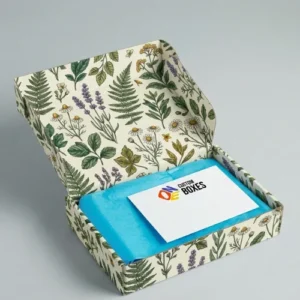
Boost Your Brand with our Custom Packaging!
Pack your products with purpose using eco friendly boxes that protect both your brand and our beautiful planet. Picture a conscious shopper picking up your product and smiling at your sustainable packaging choice. They feel good about buying from a brand that truly cares. That’s the powerful connection our eco friendly packaging builds between your business and modern customers.
These boxes do so much more than just hold your products safely. They tell the world your brand stands for something bigger. Want biodegradable kraft boxes that break down naturally? Or recyclable cardboard packaging that gives materials a second life? Maybe compostable boxes made from plant-based materials? We craft sustainable solutions for every business need. From small handmade soap brands to large organic food companies, we design green packaging that fits your eco-mission perfectly. Every box we make helps reduce plastic waste, lower carbon footprints, and protect our oceans, forests, and wildlife.
What makes our eco friendly packaging truly special? We never compromise on style or strength for sustainability. Our boxes feature soy-based inks, water-based coatings, and natural finishes that look stunning without harming the earth. We use FSC-certified paper, recycled cardstock, and tree-free materials sourced responsibly. Want minimalist designs, earthy tones, or bold green messaging? We’ve got it all covered. Add custom prints, embossed logos, or natural twine closures for that perfect organic touch. Your eco friendly boxes won’t just package products. They’ll spark conversations, build loyal eco-conscious customers, and prove that going green is the smartest business move you’ll ever make.


5,000+ brands big and small 🥰 love us! ★ ★ ★ ★ ★ 5.0 Google Reviews
You’re here because you know your packaging needs to change. Maybe your customers have been asking about recyclability. Maybe a retailer told you they’re prioritizing brands with sustainable packaging. Maybe you saw a competitor switch to kraft boxes with “100% recyclable” printed on them and you realized you’re falling behind. Or maybe you genuinely care about the environmental impact of your business and you want your packaging to reflect that.
Whatever the reason, here’s the problem: the eco-friendly packaging space is full of confusing terms, misleading claims, and genuine greenwashing. Every packaging company says they’re “green.” Most of them can’t explain what that actually means for your specific product, your specific supply chain, and your specific customer base.
This page cuts through all of that. We’ll explain exactly what makes packaging eco-friendly (and what doesn’t). Which materials are genuinely sustainable and which ones just sound sustainable. What certifications actually matter. What it costs compared to conventional packaging. What your customers really care about. And how to make the switch without sacrificing the quality, appearance, or functionality your brand depends on.
Real information. No greenwashing. Let’s get into it.
This is where most confusion starts, because “eco-friendly” is not a regulated term. Anyone can call their packaging eco-friendly without meeting any specific standard. That’s why the market is flooded with vague claims that sound good but mean very little.
To cut through the noise, you need to understand the specific environmental attributes that packaging can have. Each one is different, and not all of them apply to every situation:
What it means: The material can be collected through standard recycling programs, processed, and turned into new products. The packaging doesn’t end up in a landfill. It re-enters the manufacturing cycle.
What it doesn’t mean: “Recyclable” doesn’t mean it WILL be recycled. It means it CAN be recycled if the consumer puts it in the right bin and their local facility accepts that material. Contamination (food residue, mixed materials, certain coatings) can make technically recyclable packaging non-recyclable in practice.
Our capability: All our cardboard, kraft, and corrugated boxes are recyclable through standard curbside programs in most US municipalities.
What it means: The material breaks down through natural biological processes (bacteria, fungi, other organisms) into natural substances like water, carbon dioxide, and organic matter. It returns to the earth without leaving toxic residue.
What it doesn’t mean: “Biodegradable” doesn’t specify how LONG it takes. Technically, almost everything biodegrades eventually. The meaningful question is whether it biodegrades within a reasonable timeframe under normal conditions. A cardboard box biodegrades in 2 to 3 months. A plastic bag takes 500+ years.
Our capability: Our kraft and uncoated cardboard materials biodegrade naturally within weeks to months in appropriate conditions.
What it means: The material breaks down into nutrient-rich organic matter (compost) that can be used to enrich soil. Composting is a specific, controlled form of biodegradation. Compostable materials must meet specific standards for timeframe and residue.
What it doesn’t mean: “Compostable” doesn’t always mean “home compostable.” Many compostable packaging materials require industrial composting facilities with controlled temperature, moisture, and oxygen levels. They won’t break down in your backyard compost bin. Always check whether the material is certified for home composting or industrial composting only.
Our capability: We offer select materials certified for industrial composting, including PLA (polylactic acid) window films and certain paper-based materials.
What it means: The material contains fibers or components that have already been through a previous use cycle. Post-consumer recycled (PCR) content means it came from materials that consumers used and recycled (like old boxes, newspapers, office paper). Pre-consumer recycled content comes from manufacturing waste that was reprocessed before reaching a consumer.
What it doesn’t mean: “Made from recycled content” doesn’t mean 100% recycled unless specifically stated. A box could contain 10% recycled content and technically carry this claim. Look for the specific percentage.
Our capability: We offer boxes made from post-consumer recycled cardboard with recycled content ranging from 30% to 100% depending on material type and structural requirements.
What it means: The Forest Stewardship Council (FSC) certifies that paper and wood products come from responsibly managed forests. FSC certification ensures that for every tree harvested, the forest ecosystem is maintained through replanting, biodiversity protection, and sustainable harvesting practices.
Three levels of FSC certification:
Our capability: We offer FSC-certified materials across all three certification levels.
What it means: The inks, coatings, and printing processes used have lower environmental impact than conventional alternatives. This includes soy-based inks, water-based inks, water-based coatings, and printing processes that minimize VOC emissions and chemical waste.
Our capability: Soy-based inks are standard on every order we produce. Water-based coatings and varnishes are available as alternatives to petroleum-based options.
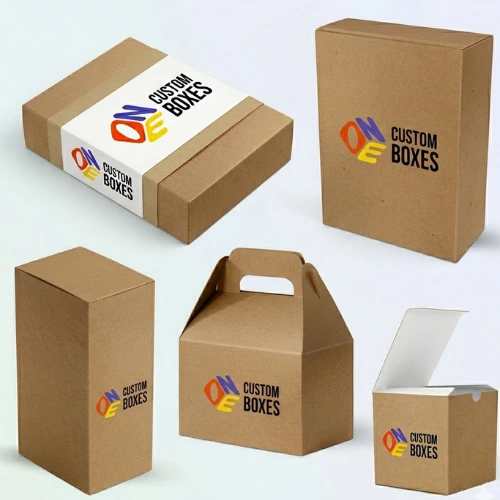
Kraft is the foundation of eco-friendly packaging and for good reason. The kraft process (from the German word for “strong”) produces paper with exceptional strength by retaining the full length of wood fibers. The result is that distinctive brown, unbleached paper that has become the universal visual signal for “eco-conscious.”
Environmental Profile:
Available Thicknesses: 250 GSM, 300 GSM, 350 GSM, 400 GSM
Print Characteristics: The natural brown color of kraft affects print output. Colors appear warmer and more muted compared to printing on white stock. White ink underlay is possible for brighter color reproduction but adds cost and a processing step. Many brands intentionally lean into the kraft aesthetic by using single-color or two-color printing that works WITH the brown base rather than fighting against it.
Structural Performance: Kraft fibers are longer than those in bleached paperboard, giving kraft excellent tear resistance and tensile strength. Pound for pound, kraft is one of the strongest paper-based packaging materials available.
Best Applications:
Limitation: Kraft has limited moisture resistance in its uncoated form. For products that release moisture, grease, or oils, a food-grade or moisture-resistant coating is needed on the interior surface. Some coatings (like PE/polyethylene) can affect recyclability, so choose water-based or biodegradable coating alternatives when sustainability is the priority.
Recycled cardboard is manufactured using fibers recovered from previously used paper products. Post-consumer recycled content specifically comes from materials that consumers used and recycled, such as old cardboard boxes, newspapers, magazines, and office paper. These fibers are collected, pulped, cleaned, and reformed into new paperboard.
Environmental Profile:
Available Recycled Content Levels:
Print Characteristics: Modern recycled cardboard prints almost identically to virgin cardboard. The surface smoothness and ink absorption are comparable, especially at 30% to 80% PCR levels. At 100% PCR, there may be very slight variations in surface texture, but these are negligible for most commercial printing applications.
Structural Performance: Recycled fibers are slightly shorter than virgin fibers, which means 100% PCR cardboard has marginally lower tear resistance and stiffness compared to virgin SBS board at the same GSM. In practical terms, this difference is minimal for most packaging applications. Increasing the GSM by 25 to 50 points compensates fully if maximum strength is needed.
Best Applications:
Cost Comparison: Recycled cardboard pricing is comparable to virgin cardboard and sometimes slightly lower. The common assumption that “recycled costs more” is outdated. Market pricing fluctuates, but in recent years, recycled content has been cost-competitive or cost-neutral for most orders.
Corrugated cardboard is already the recycling success story of the packaging industry. In the US, the corrugated recycling rate exceeds 90%, making it one of the most recovered and reprocessed materials in the entire waste stream. Most corrugated cardboard manufactured today already contains significant recycled content as standard practice.
Environmental Profile:
Flute Types and Sustainability Tradeoffs:
| Flute Type | Thickness | Material Usage | Best For |
| E-Flute | 1.5mm | Lowest material per box | Small/medium retail boxes, inner packaging |
| B-Flute | 3mm | Moderate | Standard shipping, displays, carriers |
| C-Flute | 4mm | Higher | Heavy-duty shipping, large products |
| BC-Flute (Double Wall) | 7mm | Highest | Very heavy products, maximum protection |
Sustainability Tip: Choosing the thinnest flute that adequately protects your product reduces material usage per box. Many brands over-specify corrugated thickness out of caution, using C-flute when B-flute would perform identically for their product weight and shipping conditions. Right-sizing your flute type is one of the easiest ways to reduce material waste.
Best Applications:
Rigid board packaging is traditionally the least eco-friendly packaging category due to its thickness, weight, and multi-component construction. However, sustainable rigid board options now exist that maintain the luxury feel while significantly reducing environmental impact.
Sustainable Rigid Board Options:
| Component | Conventional | Sustainable Alternative |
| Core Board | Virgin greyboard | 100% recycled greyboard |
| Outer Wrap | Virgin art paper | FSC-certified or recycled art paper |
| Lamination | Plastic (BOPP) lamination | Biodegradable or water-based lamination |
| Adhesive | Standard PVA or hot-melt | Bio-based adhesives |
| Magnetic Closure | Standard (contains small magnet) | Same (magnets are reusable, minimal impact) |
| Insert Trays | Plastic thermoformed | Molded pulp or cardboard |
Environmental Profile of Sustainable Rigid:
Print and Finish Quality: Sustainable rigid board looks and feels identical to conventional rigid board. The recycled greyboard core is invisible (it’s inside). The FSC-certified or recycled outer wrap prints with the same color accuracy, takes foil stamping and embossing just as well, and supports soft-touch lamination (biodegradable version). Your customers will not notice any difference in the finished product.
Best Applications:
Cost Impact: Sustainable rigid board typically costs 5% to 15% more than conventional rigid board, depending on specific material choices. For brands already using rigid packaging (which is inherently premium-priced), this increase is minimal relative to the total box cost and the brand value of sustainable credentials.
Molded pulp is made from recycled paper fiber (often old newspapers and cardboard) that is pulped, molded into shape, and dried. It’s the material you see in egg cartons, wine bottle holders, and electronics protective packaging.
Environmental Profile:
Applications in Custom Packaging:
Why It Matters: Molded pulp directly replaces plastic inserts, foam, and thermoformed trays that are the hidden sustainability problem in many “eco-friendly” boxes. A brand can put their product in a recyclable kraft box and still have a non-recyclable plastic insert inside. Molded pulp solves this by providing the same protective function with a 100% recycled, compostable material.
The box material is only part of the sustainability equation. What you print on it, coat it with, and glue it together with also matters.
| Ink Type | Base | VOC Emissions | Recyclability Impact | Color Quality | Our Standard? |
| Soy-Based | Soybean oil | Very Low | Easier de-inking during recycling | Excellent | Yes (default) |
| Water-Based | Water | Very Low | No negative impact | Good | Available |
| Vegetable-Based | Various plant oils | Very Low | Easier de-inking | Excellent | Available |
| UV-Cured | Photoinitiators | Low | Moderate (harder to de-ink) | Excellent | Available |
| Petroleum-Based | Petroleum | High | Harder to de-ink | Excellent | Not used |
Why Soy-Based Inks Matter:
Soy-based inks produce colors just as vibrant as petroleum-based alternatives. They release approximately 80% fewer VOCs during printing. And critically, they’re easier to remove (de-ink) during the paper recycling process, which means cardboard printed with soy inks is more effectively recyclable. This is a detail most people never think about, but it matters in the recycling stream.
| Coating Type | Eco-Friendly? | Recyclability Impact | Best For |
| Water-Based Varnish | Yes | No negative impact | General surface protection, matte or gloss finish |
| Aqueous Coating | Yes | No negative impact | Moderate surface protection and sheen |
| Biodegradable Lamination | Yes | Breaks down naturally, doesn’t contaminate recycling | Premium finish on eco-friendly boxes |
| Standard BOPP Lamination | No | Creates a plastic layer that contaminates paper recycling | Avoid for sustainability-focused packaging |
| PE (Polyethylene) Coating | No | Affects recyclability in most programs | Food packaging where moisture barrier is essential |
| UV Coating | Partially | Doesn’t contaminate recycling severely but not biodegradable | Selective use where durability is critical |
The Lamination Problem:
Standard plastic lamination (BOPP film) is the single biggest hidden sustainability issue in “eco-friendly” packaging. A brand can use recycled kraft paper and soy inks, but if they laminate the box with BOPP for a glossy finish, that plastic layer makes the entire box non-recyclable in most curbside programs. The plastic can’t be separated from the paper during recycling, so the whole box goes to landfill.
The Solution: Biodegradable lamination films that provide the same protective and aesthetic function as BOPP but break down naturally and don’t contaminate the paper recycling stream. We offer biodegradable lamination in both matte and gloss finishes. The visual and tactile quality is virtually identical to standard lamination.
Most consumers never think about the glue in their packaging, but adhesives can contain solvents and chemicals that affect both recyclability and biodegradability. We use water-based and bio-based adhesives that are compatible with paper recycling processes and don’t introduce harmful chemicals into the composting or recycling stream.
Going sustainable doesn’t mean going boring. Here’s every finishing option available on eco-friendly packaging and how each one impacts sustainability:
| Finish | Compatible with Recycling? | Compatible with Composting? | Visual/Tactile Effect | Cost Impact |
| No Finish (Uncoated) | Fully | Fully | Raw, natural, tactile paper texture | None (cheapest option) |
| Water-Based Matte Varnish | Fully | Partially (depends on formulation) | Subtle matte sheen, slight protection | Low |
| Water-Based Gloss Varnish | Fully | Partially | Moderate shine, good protection | Low |
| Aqueous Coating | Fully | Partially | Smooth surface, fingerprint resistance | Low |
| Biodegradable Matte Lamination | Yes (lamination biodegrades) | Yes (industrial) | Smooth matte finish similar to standard matte lam | Moderate |
| Biodegradable Gloss Lamination | Yes | Yes (industrial) | Shiny finish similar to standard gloss lam | Moderate |
| Embossing / Debossing | Fully (no added material) | Fully | Raised or pressed 3D texture | Moderate |
| Foil Stamping | Mostly (small foil area, minimal impact) | No (metallic foil doesn’t compost) | Metallic shine on logos/text | Higher |
| Spot UV (Water-Based) | Mostly | Partially | Selective gloss on matte background | Higher |
Best Eco-Friendly Finish Combinations:
For Natural/Organic Brands: Uncoated kraft + single-color soy ink + debossed logo. Zero finish additives. Maximum sustainability credibility. Surprisingly premium-looking when done well.
For Premium Brands Going Green: Recycled cardboard + biodegradable matte lamination + foil-stamped logo. Maintains luxury feel while being genuinely sustainable.
For Retail Brands Needing Shelf Pop: Recycled SBS cardboard + water-based gloss varnish + full-color soy ink printing. Vibrant shelf presence with minimal environmental trade-offs.
For Maximum Sustainability (Zero Compromise): Kraft or 100% PCR cardboard + water-based varnish + soy ink + no lamination + no foil. Fully recyclable, fully biodegradable, zero problematic components.
The eco-packaging space is crowded with certification logos, symbols, and claims. Some are rigorous and meaningful. Some are essentially self-awarded marketing badges. Here’s how to tell the difference:
| Certification | What It Verifies | Credibility | Consumer Recognition |
| FSC (Forest Stewardship Council) | Paper sourced from responsibly managed forests | Very High (independent third-party audit) | High (widely recognized logo) |
| SFI (Sustainable Forestry Initiative) | Sustainable forest management practices | High (third-party verified) | Moderate |
| How2Recycle Label | Clear recycling instructions for consumers | High (standardized system) | Growing rapidly |
| BPI Certified Compostable | Meets ASTM D6400 for compostability | Very High (laboratory tested) | Moderate |
| Green Seal | Product meets environmental leadership standards | High (third-party certified) | Moderate |
| Cradle to Cradle | Product designed for circular economy | Very High (comprehensive assessment) | Low to Moderate |
| Claim | Why It’s Weak |
| “Eco-Friendly” | Not a regulated term. Anyone can say it. No verification required. |
| “Green” | Same as above. Completely unregulated. |
| “Natural” | Vague and unregulated in packaging context. Paper comes from trees, which are natural. That doesn’t automatically make the packaging sustainable. |
| “Earth-Friendly” | Marketing language with no standardized meaning or verification. |
| “Made with Recycled Materials” | Could mean 1% recycled content or 100%. Without a specific percentage, it’s meaningless. |
| “Biodegradable” | Without specifying conditions and timeframe, this is misleading. A plastic bag is technically “biodegradable” over 500 years. |
If you’re going to make sustainability claims on your packaging, back them up with third-party certifications. FSC certification for the material. How2Recycle label for disposal instructions. Specific recycled content percentages. These are credible, verifiable, and increasingly expected by retailers and consumers.
Vague claims without certification actually backfire with environmentally conscious consumers. They’ve been burned by greenwashing too many times. Specificity builds trust. Vagueness destroys it.
Challenge: Food packaging often requires moisture barriers, grease resistance, and food-safe coatings that can conflict with recyclability and compostability.
Eco Solutions:
Specific Product Recommendations:
| Food Product | Eco Material | Eco Coating | Eco Window |
| Bakery (cookies, pastries) | Kraft | Water-based grease resist | PLA film or open window |
| Coffee | Kraft | Water-based varnish | None (product in sealed inner bag) |
| Tea | FSC cardboard or kraft | Aqueous coating | PLA film |
| Chocolate (premium) | Recycled rigid board | Biodegradable matte lam | None or PLA |
| Snacks (dry) | Recycled SBS cardboard | Water-based gloss varnish | PLA or glassine |
| Beverages | Recycled corrugated carriers | Water-based varnish | N/A |
Challenge: The beauty industry relies heavily on premium finishes (lamination, foil, spot UV) that can conflict with recyclability. Consumer expectations for “luxury” packaging often clash with sustainability goals.
Eco Solutions:
The “Clean Beauty” Packaging Alignment:
If your brand markets itself as clean, natural, organic, or green, your packaging must match that message. A “100% organic” serum in a non-recyclable, plastic-laminated box with petroleum-based inks is a contradiction that savvy beauty consumers will notice and call out. Kraft with minimal finishing is becoming the default aesthetic for clean beauty, and it works because it visually reinforces the brand’s values.
Challenge: CBD packaging has compliance requirements (child-resistant features, specific labeling) that can complicate sustainable material choices.
Eco Solutions:
Challenge: E-commerce generates massive packaging waste. Every online order involves a shipping box, void fill, tape, and often an inner product box. Multiply that across millions of orders and the environmental impact is staggering.
Eco Solutions:
The Right-Sizing Opportunity:
Most e-commerce packaging is oversized. A product that measures 6″ x 4″ x 3″ ships in a 12″ x 10″ x 6″ box filled with plastic air pillows. That’s wasted material, wasted shipping cost (dimensional weight pricing), and wasted environmental credibility.
Custom-sized boxes that fit your product precisely eliminate void fill, reduce material usage by 30% to 50%, lower shipping costs through reduced dimensional weight, and create a better unboxing experience because the product doesn’t rattle around inside an oversized box.
Right-sizing is the single most impactful eco-friendly packaging decision most e-commerce brands can make. It costs less, looks better, ships cheaper, and uses fewer resources. There is literally no downside.
Challenge: Retail packaging needs to perform on shelf (visual impact, structural integrity, print quality) while meeting growing retailer sustainability requirements.
Eco Solutions:
Retailer Requirements Are Getting Stricter:
Walmart’s Project Gigaton requires suppliers to reduce greenhouse gas emissions across their supply chain, including packaging. Target has committed to 100% of owned brand packaging being recyclable, compostable, or reusable by 2025. Amazon has its Frustration-Free Packaging program that requires recyclable, right-sized packaging.
If you sell through major retailers, sustainable packaging isn’t a nice-to-have. It’s becoming a requirement for maintaining shelf placement. Getting ahead of these requirements now means smoother retailer relationships and uninterrupted sales later.
The most common objection we hear: “Eco-friendly packaging costs more.” Here’s the actual data:
| Material | Conventional Cost | Eco Alternative | Eco Cost | Difference |
| Virgin SBS cardboard | $$ (baseline) | Recycled SBS cardboard | $$ | 0% to +5% |
| Standard white cardboard | $$ | Kraft (unbleached) | $ | 10% to 20% CHEAPER |
| Virgin corrugated | $$ | Recycled corrugated | $$ | 0% to +3% |
| Petroleum-based inks | $ (baseline) | Soy-based inks | $ | 0% (same cost) |
| BOPP plastic lamination | $ (baseline) | Biodegradable lamination | $$ | +15% to +25% |
| Plastic window film (PET) | $ (baseline) | PLA compostable film | $$ | +20% to +30% |
| Plastic inserts/trays | $$ | Molded pulp inserts | $$ | 0% to +10% |
| Standard adhesives | $ | Bio-based adhesives | $ | +5% to +10% |
Most eco-friendly material swaps are cost-neutral or very close to it. Recycled cardboard, soy inks, and kraft are not premium-priced materials. They’re mainstream, widely available, and competitively priced.
The cost increases come from specialty items: biodegradable lamination, compostable window films, and bio-based adhesives. These add 15% to 30% to those specific components, not to the entire box cost. On a box that costs $1.00 total, switching from BOPP lamination to biodegradable lamination might add $0.05 to $0.08 per unit.
And then there are the cost savings most brands don’t calculate:
When you factor in these indirect benefits, eco-friendly packaging often delivers a positive ROI even before considering the environmental impact.
You don’t have to change everything overnight. Here’s a practical, phased approach:
You don’t need to be perfect to start. You need to start to get better.
If you’re going to communicate your sustainability efforts, use specific, verifiable numbers. Here are the metrics that matter most:
Pro Tip: Put the most compelling metric on the front of your box. “100% Recycled. 100% Recyclable.” in clean typography is more impactful than a paragraph about your sustainability philosophy buried on the back panel.
“Eco-friendly packaging” printed on a box that’s laminated with non-recyclable plastic film and printed with petroleum-based inks is greenwashing. Consumers and regulatory bodies are increasingly calling this out. Be specific. Back claims with certifications. If your packaging isn’t fully sustainable yet, be honest about what IS sustainable and what you’re working to improve. Authenticity builds more trust than perfection.
“Recyclable” means it CAN be recycled. “Recycled” means it’s MADE FROM recycled materials. Both matter, but they’re different claims. Many brands prominently display “recyclable” on packaging made entirely from virgin materials. That’s technically accurate but misleading. If you’re using recycled content, say so with the specific percentage. It’s a stronger claim.
A recycled kraft box with BOPP plastic lamination is NOT recyclable in most programs. The plastic lamination contaminates the paper recycling stream. Many brands invest in sustainable base materials and then negate that investment with conventional finishes. If you’re committed to recyclability, your lamination, coating, and adhesive choices matter just as much as your paper choice.
Some brands wrap their product in tissue paper, placed inside a rigid box, wrapped in a belly band, placed inside a shipping box, filled with crinkle paper, sealed with a branded sticker. Every one of those layers is material that eventually becomes waste. Challenge every packaging component: does this ADD meaningful value to the customer experience, or is it just adding waste? Often, a single well-designed box creates a better experience than five layers of unnecessary packaging.
Even genuinely eco-friendly packaging ends up in landfills if customers don’t know how to dispose of it properly. A How2Recycle label, a simple “Please Recycle” message, or disposal instructions printed on the box significantly increase the likelihood that your packaging actually gets recycled instead of thrown in the trash.
The carbon footprint of shipping an oversized, heavy box 3,000 miles is significant regardless of what the box is made from. Right-sizing (reducing box dimensions and material weight) reduces both material usage AND transportation emissions. A smaller, lighter box shipped efficiently can have a lower total environmental impact than a larger “eco-friendly” box shipped inefficiently.
It depends on your customer’s disposal infrastructure. In the US, curbside recycling is widely available in most municipalities. Industrial composting facilities are much less common. For most brands selling to US consumers, recyclable packaging will actually get properly disposed of more often than compostable packaging, simply because recycling infrastructure is more accessible. Compostable is ideal for specific applications (food service, events, regions with strong composting programs) but recyclable is currently the more practical choice for most consumer packaging.
We don’t treat sustainability as a product line. It’s how we operate across every order:
100% of our box materials are recyclable. Every cardboard, kraft, and corrugated material we use can be recycled through standard municipal programs.
Soy-based inks are standard. Not an upgrade. Not an add-on. Every order uses soy-based inks by default.
Biodegradable lamination is available for brands wanting premium finishes without compromising recyclability.
Right-sizing guidance is part of our design process. We actively recommend the smallest box dimensions that properly fit and protect your product, reducing material waste on every order.
FSC-certified materials are available across all material types for brands wanting certified sustainable sourcing.
We’re transparent about what we can and can’t do. We’re not a zero-waste company. We’re not carbon-neutral yet. But we’re committed to continuous improvement, and we’re honest about where we are in that journey. That matters more than perfect marketing language.
You don’t need to overhaul everything at once. Start with one product. One SKU. One box. See how it looks. See how customers respond. See how it feels to know your packaging is doing less harm.
Here’s the process:
No minimums. Free design support. Free sustainability consultation to identify the right materials and certifications for your specific situation.
At the core of every partnership we forge is quality and trust—here’s what our clients have to say about working with us.




At the core of every partnership we forge is quality and trust—here’s what our clients have to say about working with us.