Boost Your Brand with our Custom Packaging!
You’re here because you understand something most people overlook: the gift box IS part of the gift. Not an afterthought. Not just a container. The box sets the emotional tone before anyone sees what’s inside. It’s the difference between someone casually opening a present and someone pausing, holding the box for a moment, running their thumb across the surface, and feeling something before they even lift the lid.
5,000+ brands big and small 🥰 love us! ★ ★ ★ ★ ★ 5.0 Google Reviews
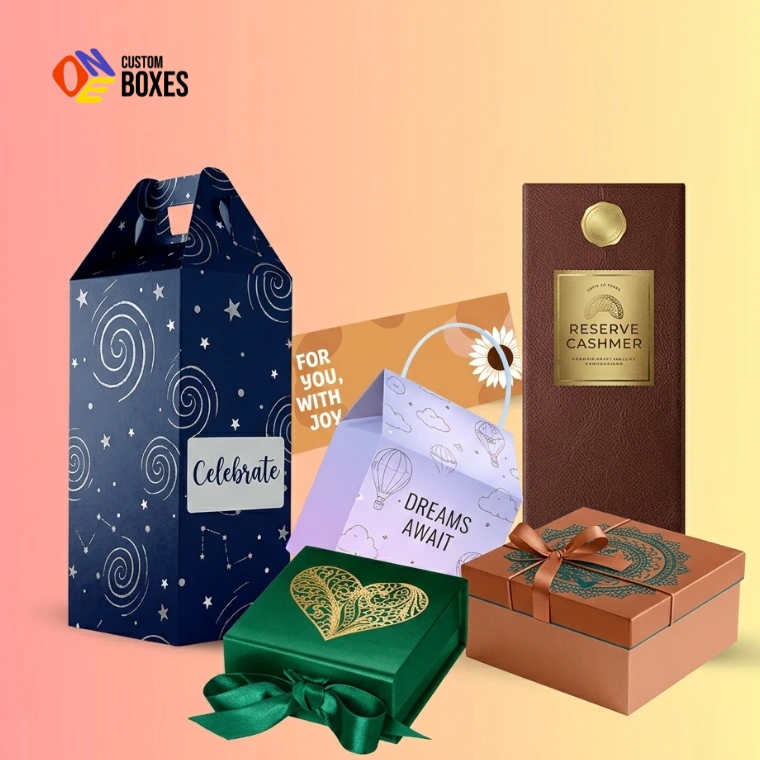
You’re here because you understand something most people overlook: the gift box IS part of the gift. Not an afterthought. Not just a container. The box sets the emotional tone before anyone sees what’s inside. It’s the difference between someone casually opening a present and someone pausing, holding the box for a moment, running their thumb across the surface, and feeling something before they even lift the lid.
Maybe you sell products that people buy as gifts and your current packaging doesn’t create that moment. Maybe you’re a corporate buyer sourcing branded gift boxes for clients, employees, or events. Maybe you run a gift basket company, a subscription box service, or a wedding favor business and you need boxes that look premium without destroying your margins. Maybe you’re a retailer creating holiday gift sets and you need packaging that justifies the premium price tag.
Whatever your situation, gift packaging has its own rules. It’s not retail packaging with a ribbon on top. The materials are different. The structures are different. The psychology is different. The finishing expectations are dramatically higher. And the margin for error is basically zero, because a gift that looks cheap in the box reflects on the person giving it, not just the brand that made it.
This page covers everything you need to know before ordering custom gift boxes. Every box structure available, which one fits your product and occasion, what materials and finishes communicate “premium” versus what’s just wasting money, how to size gift boxes properly, what inserts and presentation elements actually matter, what it costs, and what mistakes to avoid.
Let’s get into it.
Before choosing a box style, you need to answer this question honestly. Because the “right” gift box depends entirely on the experience you’re designing, not just the product you’re packaging.
Different gifting contexts have completely different expectations:
The customer already paid a premium price. The box needs to validate that decision. Weight in the hands. A magnetic closure that resists slightly before releasing. A perfectly fitted product nestled inside a custom insert. Interior printing or fabric lining. Every detail says “you made the right choice spending this much.”
Best box types: Rigid two-piece, magnetic closure, hinged lid
Material: Rigid board (1200-2000 GSM)
Expected finishes: Soft-touch lamination, foil stamping, embossing, satin ribbon
The box carries your brand. It represents your company’s taste, attention to detail, and how much you value the relationship. Corporate gift boxes need to look expensive without being flashy. Sophisticated, not showy. Professional but warm. And they often need to accommodate a variety of products inside a single box since corporate gift sets frequently combine multiple items.
Best box types: Rigid lift-off lid, magnetic closure, drawer-style
Material: Rigid board with branded wrap or high-GSM cardboard
Expected finishes: Matte lamination, debossed or foil-stamped company logo, branded ribbon
Small, elegant, consistent. These boxes are seen by every guest. They sit on tables as part of the event decor. They need to match a color scheme, a theme, an aesthetic vision. And you typically need hundreds of them, so per-unit cost matters significantly.
Best box types: Small rigid two-piece, pillow boxes, drawer boxes, small magnetic closure
Material: Cardboard (350-400 GSM) or thin rigid board
Expected finishes: Color-matched to event palette, foil-stamped names or dates, ribbon or tag
Retail brands bundling products into holiday gift sets need packaging that screams “gift-ready” on the shelf. The customer shouldn’t need to wrap it. The box itself should look like a present. This is packaging that does double duty as both product protection and gift presentation.
Best box types: Rigid two-piece, window boxes, sleeve-and-tray, collapsible rigid
Material: Rigid board or heavy cardboard (400+ GSM)
Expected finishes: Full-color seasonal graphics, gloss or soft-touch lamination, foil accents
The box arrives at someone’s door every month. It needs to create excitement every single time, not just the first time. Subscription gift box fatigue is real. If the 6th box feels identical to the 1st, the magic is gone and cancellations follow. The exterior needs to survive shipping, and the interior needs to deliver a curated unboxing experience.
Best box types: Corrugated mailer with branded interior, rigid collapsible (for premium subscriptions)
Material: Corrugated (E or B flute) for standard, rigid collapsible for luxury
Expected finishes: Full-color exterior and interior printing, branded tissue paper, custom inserts
Larger boxes designed to hold multiple products arranged visually. The presentation when the lid comes off IS the experience. Products need to be visible, organized attractively, and secured so nothing shifts during delivery. These boxes often have open tops or clear lids for display.
Best box types: Deep rigid trays with separate lids, windowed lids, nesting boxes
Material: Rigid board or heavy corrugated
Expected finishes: Fabric-wrapped exteriors, printed wraps, ribbon, branded belly bands
The classic gift box. Separate base and lid. The lid lifts off to reveal the product inside. This is what most people picture when they think “gift box” and it remains the most popular structure for premium gifting across all industries.
How It Works: Two separate rigid board components. The base holds the product. The lid sits over the base with approximately 2-3mm overlap on each side. The slight resistance as the lid lifts creates a satisfying, controlled reveal.
Typical Sizes:
| Gift Type | Recommended Size |
| Jewelry (ring, earrings) | 3.5″ x 3.5″ x 1.5″ |
| Jewelry (necklace, bracelet) | 7″ x 5″ x 1.5″ |
| Small gift (candle, small bottle) | 5″ x 5″ x 4″ to 6″ x 6″ x 5″ |
| Medium gift (clothing item, multi-product set) | 10″ x 8″ x 4″ to 12″ x 10″ x 5″ |
| Large gift (hamper, large gift set) | 14″ x 10″ x 6″ to 16″ x 12″ x 8″ |
| Apparel (shirt, folded clothing) | 14″ x 10″ x 3″ to 17″ x 12″ x 3″ |
Material: Rigid board (1200-2000 GSM core wrapped in printed art paper or specialty paper). The core provides structure. The wrap provides the visual and tactile brand experience.
Pros: Classic, universally recognized as premium. Accommodates any product shape. Full interior access for dramatic product reveals. Stackable for retail display.
Cons: Cannot ship flat (unless using collapsible rigid, discussed below). Bulky for storage and shipping. Higher material cost than folding cartons.
Best For: Luxury retail, corporate gifts, jewelry, cosmetics gift sets, holiday gift sets, premium food gifts.
A single-piece rigid box with a hinged lid that closes with hidden magnets embedded in the front flap and base. The lid opens like a book and the magnets provide a satisfying “click” when closing. This has become the dominant gift box structure in premium packaging over the past five years.
How It Works: The box is constructed from a single piece of rigid board, scored and folded with the lid attached at the back. Two or more magnets are concealed inside the front flap and corresponding positions on the base. When closed, the magnets hold the lid firmly shut. Opening requires a gentle pull against the magnetic resistance, which creates a tactile, premium interaction.
Typical Sizes:
| Gift Type | Recommended Size |
| Small gift (perfume, small cosmetic set) | 6″ x 4″ x 3″ to 7″ x 5″ x 3″ |
| Medium gift (wine bottle, multi-item set) | 10″ x 7″ x 4″ to 12″ x 8″ x 4″ |
| Large gift (luxury hamper, corporate gift) | 14″ x 10″ x 5″ to 16″ x 12″ x 6″ |
| Book-style (documents, certificates, flat gifts) | 10″ x 8″ x 2″ to 13″ x 10″ x 2″ |
Material: Rigid board (1200-1800 GSM). Magnets are typically neodymium (small, powerful, lightweight). Wrapped in printed or specialty paper.
Pros: One-piece construction (no separate lid to lose or misalign). The magnetic interaction feels premium and modern. Stays securely closed during transport. Very photogenic for social media and e-commerce product photography.
Cons: Magnets add per-unit cost. Slightly more complex manufacturing. The hinge point is a potential stress area if the box is overloaded. Not ideal for very heavy products (magnets may not hold if box is picked up by the lid with heavy contents inside).
Best For: Premium cosmetics, skincare, perfume, jewelry, tech accessories, corporate gifts, wine and spirits, luxury food.
A two-component structure where an inner tray slides out of an outer sleeve, like opening a drawer. The sliding motion creates anticipation and a sense of reveal that’s different from lifting a lid. It’s theatrical.
How It Works: The outer sleeve is a rigid shell. The inner tray sits inside and slides in and out. A ribbon pull tab or finger notch allows the recipient to pull the inner tray out smoothly.
Typical Sizes:
| Gift Type | Recommended Size |
| Jewelry | 4″ x 3″ x 1.5″ to 6″ x 4″ x 2″ |
| Small luxury gift | 6″ x 5″ x 3″ to 8″ x 6″ x 3″ |
| Chocolate/confectionery | 8″ x 4″ x 2″ to 10″ x 6″ x 2″ |
| Multi-drawer (advent calendar style) | Custom |
Material: Rigid board for both sleeve and tray. The fit between sleeve and tray must be precise: too tight and the drawer sticks; too loose and it falls out. Manufacturing tolerance is critical.
Pros: Unique, memorable opening experience. Excellent for products that benefit from a slow reveal. Can be designed with multiple drawers for multi-product sets or advent calendar style gifts. The sleeve provides a large branding surface area.
Cons: Higher manufacturing cost than two-piece or magnetic boxes. Requires precision fit (tight manufacturing tolerances). Not ideal for heavy products because the drawer can be difficult to slide with significant weight. Ribbon pull tabs add a component and cost.
Best For: Luxury chocolate, premium jewelry, high-end cosmetics, advent calendars, multi-component gift sets, corporate gifts with curated product selections.
A tray (usually open-topped) that slides into a printed sleeve. Simpler and more cost-effective than full drawer boxes. The sleeve provides the visual branding while the tray holds and presents the product.
How It Works: The tray is typically a folding carton (cardboard) or shallow rigid tray. The sleeve wraps around it like a band or jacket. The recipient slides the sleeve off to access the tray and product.
Typical Sizes: Highly variable. The sleeve can wrap around the narrow dimension (belly band style) or the full dimension (full sleeve).
Material: Tray can be cardboard (cost-effective) or rigid board (premium). Sleeve is usually printed cardboard (300-400 GSM) which is where most of your branding lives.
Pros: Cost-effective compared to full rigid construction. The sleeve is the primary print surface, so you can update branding or seasonal designs by changing just the sleeve while keeping the same tray. Good for limited editions, seasonal variants, or promotional packaging where frequent design changes are needed.
Cons: Less perceived luxury than rigid magnetic or two-piece. The sleeve can tear if not handled carefully. Not suitable for heavy products without reinforced tray construction.
Best For: Mid-range gift products, seasonal packaging rotations, product sampling kits, cosmetic sets, artisan food gifts, book and stationery gifts.
These look and feel identical to standard rigid boxes when assembled. But they’re engineered with hidden fold points that allow them to collapse flat for storage and shipping, then pop into shape in seconds.
How It Works: The rigid board walls are scored and connected with ribbon or magnetic catches at the base. The box ships flat (reducing storage space by 70-80% and significantly lowering shipping costs). The recipient or retailer pops the base into shape, and hidden magnets or catches lock the walls upright. The result looks and feels like a standard rigid box.
Typical Applications: E-commerce brands that want rigid box quality but can’t afford to ship pre-assembled rigid boxes. Subscription boxes at the premium tier. Retail brands needing to store large quantities of gift boxes without dedicating massive warehouse space.
Material: Same rigid board as standard rigid boxes (1200-1800 GSM). Magnets or ribbon catches for assembly. Wrapped in printed or specialty paper.
Pros: All the luxury aesthetics of rigid boxes with dramatically lower storage and shipping costs. Flat-packed boxes take up 70-80% less warehouse space. Shipping costs are reduced proportionally. Assembly takes 5 to 10 seconds.
Cons: Slightly higher per-unit manufacturing cost than standard rigid (due to additional engineering). The fold points, while invisible when assembled, can show slight creasing over time if the box is assembled and disassembled repeatedly. Not as structurally rigid as one-piece rigid boxes for very heavy products.
Best For: E-commerce luxury brands, subscription gift boxes, brands with limited storage space, seasonal gift sets produced in large quantities, corporate gifting programs shipping boxes to multiple locations.
Boxes with a built-in handle at the top, resembling a small house or barn shape. The handle makes them easy to carry and gives them a distinctive, gift-ready silhouette that stands out from standard rectangular boxes.
Typical Sizes:
Material: Cardboard (300-400 GSM) or kraft. Corrugated for larger, heavier items.
Pros: Built-in handle eliminates the need for a separate gift bag. Immediately reads as “gift” without any additional wrapping. Easy to assemble (most are single-piece with fold-and-lock construction). Unique shape creates retail shelf differentiation. Popular for food gifts, party favors, and small gift sets.
Cons: The gable shape limits internal space. Not suitable for flat or oddly shaped products. Perceived as less “luxury” than rigid boxes. The handle area is a structural weak point for heavy items.
Best For: Bakery gifts, party favors, small food gift sets, children’s gifts, wedding favors, event giveaways, seasonal gift packaging.
A curved, pillow-shaped box made from a single sheet of cardboard with tucked ends. Small, elegant, and cost-effective. Named for their pillow-like silhouette.
Typical Sizes:
Material: Cardboard (300-350 GSM) or kraft. Foil-wrapped board for metallic finishes.
Pros: Extremely cost-effective. Distinctive shape that stands out. Ships flat. Very easy to assemble (fold and tuck). Minimal material usage per unit. Excellent for small gifts, favors, and jewelry.
Cons: Limited internal volume due to curved shape. Not suitable for fragile items (no rigid protection). Cannot accommodate custom inserts easily. Perceived as less premium than rigid structures for high-value gifts.
Best For: Wedding favors, party favors, small jewelry gifts, hotel amenity packaging, promotional gifts, retail add-on gifts.
Sets of graduated-size boxes designed to nest inside each other. Used for multi-tier gift reveals or as decorative storage boxes that serve a purpose long after the gift is opened.
Typical Configuration:
Material: Rigid board wrapped in coordinating printed or patterned papers. Each box typically features the same design theme at different scales.
Pros: Multiple gift reveals create extended unboxing excitement. Boxes are reusable as storage/decor, providing ongoing brand visibility. Impressive perceived value. Strong gifting statement.
Cons: Highest cost of any gift box type (multiple boxes manufactured per set). Significant shipping volume even when nested. Each box must be sized precisely to nest properly with consistent clearance gaps.
Best For: Premium retail gift sets, luxury brand packaging, holiday gift collections, decorative storage boxes, milestone celebrations (birthdays, anniversaries).
| Material | Perceived Luxury Level | Weight in Hand | Print Quality | Durability | Cost | Best For |
| Rigid Board (1200-2000 GSM) | Very High | Heavy, substantial | Excellent (wrapped surface) | Very High | $$$$ | Premium gifts, luxury brands, corporate |
| Heavy Cardboard (400-450 GSM) | Medium-High | Medium | Excellent | Good | $$ | Mid-range gifts, seasonal sets |
| Standard Cardboard (300-350 GSM) | Medium | Light-Medium | Excellent | Moderate | $ | Favors, small gifts, cost-effective gifting |
| Kraft | Medium (artisan/natural context) | Light-Medium | Good (brown base) | Moderate | $ | Artisan gifts, eco-conscious gifting |
| Corrugated | Low-Medium (unless branded) | Light but sturdy | Good (litho-lam for premium) | High | $$ | Subscription gifts, shipping gift boxes |
| Specialty Papers (Textured, Linen, Felt) | Very High | Varies | N/A (texture IS the finish) | Good | $$$$ | Ultra-premium, tactile luxury |
This is the question everyone asks but nobody in the packaging industry answers directly. Here are the specific physical characteristics that make a gift box feel premium in someone’s hands:
The inside of your gift box matters just as much as the outside. Maybe more, because the interior is what the recipient interacts with most closely. Here’s every insert and presentation option available and when each one makes sense:
| Insert Type | Material | Best For | Cost | Eco-Friendly? |
| Custom Cardboard Insert | Die-cut cardboard | Bottles, jars, cosmetics, tech products | $$ | Yes (recyclable) |
| Molded Pulp Insert | Recycled paper fiber | Fragile items, bottles, electronics | $$ | Yes (recyclable, compostable) |
| EVA Foam Insert | Closed-cell foam | Jewelry, watches, high-value items | $$$ | No |
| Satin/Velvet Cushion | Fabric over foam | Jewelry, premium small gifts | $$$$ | Partially |
| Shredded Paper Fill | Paper (kraft, tissue, colored) | Gift baskets, multi-item boxes | $ | Yes (recyclable) |
| Tissue Paper (Flat) | Thin paper | General gift wrapping layer | $ | Yes (recyclable) |
| Honeycomb Paper Wrap | Paper-based | Fragile product protection + presentation | $$ | Yes (recyclable) |
| Custom Molded Foam | Polyurethane or PE foam | Exact-fit for specific product shapes | $$$ | No |
Single premium product (perfume, candle, bottle): Custom cardboard or molded pulp insert cut to the exact product shape. The product should sit securely without any movement. No rattling, no shifting, no gaps.
Jewelry or watches: EVA foam insert with cutout, covered in satin or velvet fabric. The fabric layer elevates perceived value significantly. For rings, a dedicated ring slot. For necklaces, a hook or bar that displays the piece.
Multi-product gift set: Cardboard insert with multiple cutouts, or compartmentalized tray with dividers. Each product has its own “home” in the box. Products should be visible simultaneously when the lid is removed for maximum visual impact.
Gift basket style: Shredded paper fill (kraft for natural look, colored tissue for festive look) with products arranged at varying heights. The arrangement should feel abundant but not cluttered.
Tissue Paper: The most cost-effective presentation upgrade. A sheet of branded or colored tissue paper between the lid and the product creates a layered reveal. The recipient opens the lid, sees tissue, parts the tissue, discovers the product. That extra step of discovery adds emotional value.
Ribbon: Satin, grosgrain, organza, or cotton ribbon. Can be tied around the exterior of the box (classic gift bow), used as a pull-tab on a drawer box, or placed as a lift ribbon under the product inside the box to help the recipient remove it easily.
Branded Sticker or Seal: A circular or custom-shaped sticker sealing the box closed adds a “breaking the seal” moment to the opening experience. It also keeps the lid secure during transport.
Thank You Card or Personal Note: A small card resting on top of the tissue layer. Especially powerful for e-commerce gifts where the sender isn’t physically present. For corporate gifts, a personalized note from the company CEO or account manager transforms a generic gift box into a relationship-building touchpoint.
Scented Elements: A subtle fragrance sachet, scented tissue paper, or a single dried flower stem. These are unexpected sensory additions that create memorable unboxing experiences. Use sparingly and appropriately (not suitable for food products or recipients with potential sensitivities).
Not all finishes are equal when it comes to gift packaging. Here’s how they rank in terms of perceived luxury, based on consumer studies and our experience producing millions of gift boxes:
| Rank | Finish | Perceived Luxury Level | Tactile Experience | Visual Effect | Cost Impact |
| 1 | Soft-Touch Lamination + Foil Stamping | Highest | Velvety surface with metallic contrast | Stunning | $$$$$ |
| 2 | Soft-Touch Lamination + Embossing | Very High | Velvet texture with 3D tactile logo | Elegant | $$$$ |
| 3 | Foil Stamping (Gold/Rose Gold) Alone | High | Metallic shine | Eye-catching | $$$ |
| 4 | Soft-Touch Lamination Alone | High | Velvety, suede-like | Sophisticated | $$$ |
| 5 | Matte Lamination + Spot UV | Medium-High | Smooth with selective gloss | Modern | $$$ |
| 6 | Matte Lamination Alone | Medium | Smooth, non-reflective | Clean | $$ |
| 7 | Specialty Paper (Linen, Felt Texture) | High | Textured, fabric-like | Tactile | $$$$ |
| 8 | Embossing/Debossing Alone | Medium-High | 3D texture | Subtle | $$ |
| 9 | Gloss Lamination | Medium | Shiny, smooth | Bold | $$ |
| 10 | Uncoated (Kraft or Natural) | Medium (in right context) | Raw paper texture | Authentic | $ |
Gift boxes are touched more deliberately than any other type of packaging. A retail box gets grabbed off a shelf quickly. A shipping box gets torn open. But a gift box gets held, examined, turned over, admired. The finish you choose determines what that experience feels like.
Our recommendation for most gift applications: Soft-touch lamination as the base finish. It’s the single most effective upgrade for perceived luxury. Then add ONE accent finish (foil stamping OR embossing OR spot UV) for visual interest. Stacking all three accent finishes looks over-designed. One base finish plus one accent finish is the luxury sweet spot.
Color choice on gift boxes triggers emotional and associative responses that directly affect how the gift (and your brand) is perceived:
| Color | Associations | Best For | Avoid For |
| Black | Luxury, sophistication, exclusivity | Premium products, fashion, cosmetics, tech | Children’s gifts, lighthearted occasions |
| White | Purity, elegance, simplicity | Weddings, skincare, minimalist brands | Products that show dirt/handling marks easily |
| Gold | Prestige, celebration, premium | Holiday gifts, luxury food, milestone celebrations | Everyday/casual gifting |
| Navy/Dark Blue | Trust, quality, masculinity | Corporate gifts, men’s products, professional | Very youthful or playful brands |
| Blush/Rose Pink | Femininity, romance, softness | Women’s cosmetics, bridal, beauty gifts | Products targeting male demographics primarily |
| Kraft Brown | Natural, artisan, eco-conscious | Organic products, handmade goods, eco-friendly brands | Ultra-luxury positioning |
| Red | Passion, energy, celebration | Holiday gifts, food gifts, romantic occasions | Corporate/professional contexts |
| Green (Deep) | Nature, freshness, premium | Tea, organic products, wellness gifts, holiday | Tech products, fashion (unless brand-specific) |
| Silver/Gray | Modern, neutral, sophisticated | Tech accessories, corporate, unisex gifts | Warm, festive occasions |
The strongest trend in gift box design right now is monochrome. Single color with tonal variations and one metallic accent. Examples:
Why this works: it looks intentional, confident, and premium. It photographs beautifully. It’s brand-recognizable. And it’s timeless. Trendy patterns and busy graphics date quickly. Monochrome with metallic accent never goes out of style.
Sizing gift boxes wrong is one of the most common mistakes and one of the most damaging. A product swimming inside an oversized box feels like the company didn’t care enough to get it right. A product crammed into a too-small box feels frustrating and cheap.
Interior dimensions = Product dimensions + Insert clearance + Presentation space
| Product Type | Product Dimensions (Example) | Recommended Interior Box Size | Why |
| Candle (jar) | 3.5″ diameter x 4″ tall | 5″ x 5″ x 5″ | Room for insert + visual breathing room |
| Wine bottle | 3″ diameter x 12″ tall | 4.5″ x 4.5″ x 13.5″ | Room for foam/cardboard insert |
| Perfume bottle | 2.5″ x 1.5″ x 5″ | 4″ x 3″ x 6″ | Snug insert + tissue paper layer on top |
| Jewelry (necklace) | Varies | 7″ x 5″ x 1.5″ | Standard jewelry presentation proportions |
| Cosmetic set (4 items) | Varies | Custom to arrangement | Each item needs its own insert position |
| Coffee bag (12 oz) | 5″ x 3″ x 8″ | 6.5″ x 4.5″ x 9″ | Breathing room for premium presentation |
| Book | 9″ x 6″ x 1″ | 10″ x 7″ x 2″ | Slight clearance + tissue paper wrapping |
| Clothing item (folded) | 12″ x 9″ x 2″ | 13.5″ x 10.5″ x 3″ | Room for tissue wrapping |
Critical rule: Always order a physical sample with your actual product inside before committing to a full production run. Digital mockups don’t reveal fit issues. Only a physical prototype tells you whether the product sits right, the lid closes properly, and the overall presentation matches your vision.
Most Popular Structures: Magnetic closure rigid boxes for gift sets. Two-piece rigid for individual premium items. Sleeve-and-tray for seasonal sets that need frequent design changes.
Material: Rigid board (1500+ GSM) with soft-touch lamination and foil-stamped logo. The beauty industry has trained consumers to expect tactile luxury in gift packaging. Anything less feels underwhelming.
Insert Recommendation: Custom cardboard insert with individual product cutouts. Each product visible simultaneously when the box is opened. Products arranged by size (tallest in back, smallest in front) if the box opens from the front.
Unboxing Tip: Interior printing in a brand accent color transforms the opening moment. A black exterior box that reveals a vibrant coral or gold interior creates a color surprise that photographs beautifully and feels exciting.
Most Popular Structures: Two-piece rigid for chocolate and confectionery. Gable boxes for bakery gifts. Drawer boxes for premium tea or spice sets. Window boxes for products where visual appeal drives the sale.
Material: Rigid board for premium gifts. Kraft for artisan and natural food brands. Food-grade coatings required on any surface contacting food directly.
Insert Recommendation: Cavity trays (thermoformed or cardboard) for chocolates and confections. Shredded kraft or tissue fill for basket-style arrangements. Cardboard dividers for bottle sets.
Food Safety Note: If the gift box directly contacts food products (chocolates sitting directly in the box, cookies touching the insert), all materials must be food-grade. Inks, coatings, adhesives, and insert materials must meet FDA food-contact requirements. If each food item is individually wrapped before being placed in the box, indirect food-contact standards apply (less restrictive but still important).
Most Popular Structures: Single-bottle magnetic closure for premium spirits. Two-piece rigid with foam insert for fragile bottles. Corrugated carriers for multi-bottle gifts. Wooden-style rigid boxes for ultra-premium.
Material: Rigid board (1500-2000 GSM) for single bottles. The box needs to support significant weight (a full wine bottle weighs approximately 2.5 to 3 pounds). Corrugated with printed wrap for multi-bottle sets. Custom foam inserts are essential to cradle bottles securely.
Design Tip: Wine and spirits gift boxes serve as display pieces. Many recipients keep the box on a shelf or bar cart even after removing the bottle. Design your box knowing it will have a second life as decor. This extended brand visibility is free marketing.
Most Popular Structures: Magnetic closure rigid boxes for high-value client gifts. Collapsible rigid for bulk shipping to multiple offices. Branded mailers for employee welcome kits. Drawer boxes for curated multi-item executive gifts.
Material: Rigid board with branded wrap. Corporate gift boxes typically feature subtle branding. A debossed or foil-stamped company logo on the lid. Brand colors integrated into the box design without being overwhelming. The gift should feel personal, not like marketing collateral.
Personalization Options: Variable data printing allows individual names or messages on each box (ideal for personalized client gifts or employee recognition). Custom-printed cards inside each box. Branded ribbon with company name or tagline.
Volume Tip: Corporate gifting often involves sending identical boxes to dozens or hundreds of recipients at different locations. Collapsible rigid boxes ship flat to a fulfillment center, get assembled, loaded with products, and shipped individually. This logistics approach is significantly more cost-effective than shipping pre-assembled rigid boxes.
Most Popular Structures: Two-piece rigid for classic jewelry presentation. Magnetic closure for modern brands. Drawer boxes for earring and necklace sets.
Material: Rigid board (1200-1500 GSM) wrapped in specialty paper or fabric. Jewelry boxes are small, so the material cost per unit is relatively low even at premium rigid specifications.
Insert Recommendation: Foam inserts covered in velvet, satin, or suede fabric. The fabric color should complement both the jewelry and the brand. White or cream for diamonds and silver. Black or navy for gold. Blush for rose gold.
Sizing Principle: Jewelry boxes should be sized to the specific piece, not generalized. A ring box that also holds a necklace feels impersonal. Dedicated sizing for each product type signals that the brand cares about the presentation of every piece.
Most Popular Structures: Two-piece rigid for premium candles. Heavy cardboard tuck-end for mid-range. Sleeve-and-tray for seasonal rotations.
Material: Rigid board for luxury candles ($30+ retail). Heavy cardboard (400+ GSM) for mid-range ($15-30 retail). Kraft for natural/soy candle brands.
Insert Recommendation: Snug-fit cardboard insert that holds the candle jar securely. The top of the candle should sit approximately 0.5″ below the box rim so the lid doesn’t press on the candle surface. For pillar candles without containers, tissue wrapping and a snug box interior prevent wax surface damage.
Design Tip: Candle gift boxes are often kept and reused as storage boxes. Design with this in mind. A beautiful box that sits on someone’s shelf for months provides ongoing brand exposure.
| Factor | Impact on Price |
| Box Structure | Pillow boxes cheapest. Folding cartons mid-range. Rigid boxes most expensive. Magnetic closure and drawer styles add additional cost. |
| Material Thickness | Thicker rigid board = more material = higher cost. 1200 GSM vs 2000 GSM is a meaningful price difference. |
| Size | Larger boxes use more material. Direct correlation. |
| Outer Wrap/Covering | Standard printed art paper is affordable. Specialty papers (linen texture, metallic, felt) add significant cost. Fabric covering is highest. |
| Finishing | Lamination is affordable. Foil stamping adds cost per stamped area. Embossing adds cost. Spot UV adds cost. Stacking finishes multiplies cost. |
| Inserts | Cardboard inserts are affordable. Foam inserts cost more. Fabric-covered foam inserts cost most. |
| Magnets | 2 to 4 magnets per box add $0.30 to $0.80 per unit depending on magnet strength and size. |
| Interior Printing | Printing inside the box adds a print pass and increases cost. Worth it for premium applications. |
| Collapsible Engineering | Collapsible rigid costs 15-25% more than standard rigid per unit but saves 50-70% on shipping and storage. |
| Quantity | Per-unit cost drops substantially at higher volumes. Setup costs (dies, plates, wraps) spread across more units. |
| Box Type | Price Range Per Unit |
| Pillow box (cardboard, printed) | $0.30 to $0.80 |
| Gable box (cardboard, printed) | $0.50 to $1.20 |
| Folding carton gift box (cardboard, laminated) | $0.60 to $1.50 |
| Sleeve-and-tray (cardboard) | $0.80 to $2.00 |
| Rigid two-piece (standard wrap, no finish) | $2.50 to $5.00 |
| Rigid two-piece (premium finish, foil stamping) | $4.00 to $8.00 |
| Magnetic closure rigid | $4.50 to $10.00 |
| Drawer box (rigid) | $5.00 to $12.00 |
| Collapsible rigid (magnetic) | $5.50 to $12.00 |
| Nesting box set (3-piece) | $12.00 to $30.00 |
These are ballpark figures. Actual pricing depends on exact dimensions, material specifications, finishing options, insert type, and order quantity. Request a free custom quote for accurate numbers.
Visually stunning printing and finishing on thin, lightweight cardboard creates a disconnect. The eye says “luxury” but the hand says “cheap.” Perceived value is determined more by tactile weight than visual design. If you’re positioning a gift as premium, the box must have physical substance.
Nothing destroys a premium gift experience faster than shaking the box and hearing the product rattle around inside. This signals poor fit, careless packaging, and potential product damage. Custom inserts eliminate this problem entirely. If custom inserts aren’t in the budget, right-sizing the box to the product with tissue paper filling is the minimum.
Opening a beautifully finished dark blue box with gold foil on the exterior to find a plain white interior is like walking into a luxury store with beautiful architecture and finding bare concrete walls inside. The interior doesn’t need to be elaborate. Even a single coordinating color printed inside the box and lid transforms the experience.
A gift box covered in logos, taglines, website URLs, and brand messaging feels like marketing material, not a gift. Subtle branding works: a single debossed or foil-stamped logo on the lid. Maybe a small logo on the interior. A branded sticker seal. The gift should feel personal, not promotional.
A magnetic closure that’s too strong. A two-piece lid that’s too tight. A drawer that sticks. A ribbon pull that tears. If the recipient struggles to open the box, the frustration overrides whatever positive experience follows. Always test your box opening experience with multiple people. It should feel effortless but intentional.
A tiny gift in a massive box feels like a disappointment. A gift box so small that the product barely fits feels cramped. Size the box to create a proportional, harmonious relationship between box and product. The product should feel intentionally placed, not squeezed in or lost in empty space.
A premium box that allows the product to get damaged during delivery defeats its entire purpose. Especially for e-commerce and shipped gifts, the gift box needs to either provide adequate product protection itself (through inserts and structural design) or be placed inside a separate shipping box with appropriate cushioning. The recipient should never open a beautiful box to find a damaged product inside.
Eco-friendly gift packaging is shifting from “nice to have” to “expected.” Recycled rigid board, biodegradable lamination, molded pulp inserts, and kraft elements are increasingly common even in premium gifting. Consumers, especially younger demographics, notice and appreciate when gift packaging is sustainable. Some actively avoid brands using excessive, non-recyclable packaging.
The trend is moving from visually complex designs (patterns, multiple colors, heavy graphics) toward simple designs with rich tactile finishes. A solid-color box with soft-touch lamination and a blind-embossed logo is outperforming busy, multi-element designs in premium contexts. Touch is becoming more important than sight in gift packaging.
Variable data printing technology now allows cost-effective personalization on gift boxes. Individual names, custom messages, unique codes, or recipient-specific designs printed on each box. This is transforming corporate gifting (each client gets a personalized box) and direct-to-consumer gifting (sender can include a custom message printed directly on the box or an insert card).
Gift boxes designed to have a second life after the gift is removed. Jewelry boxes that become storage. Rigid boxes that become decorative keepsakes. Candle boxes that become planters. The packaging isn’t just containing the gift. It IS part of the gift. This trend extends the brand’s presence in the recipient’s home long after the original product is used.
Social media unboxing content continues to grow. Gift packaging that creates a photogenic, multi-step reveal generates organic marketing value. Layered presentation (lid, tissue, card, product reveal) gives content creators more moments to capture and share. Brands designing gift boxes with social sharing in mind are getting free exposure worth far more than the packaging cost.
Less is more in current premium gift packaging. Single-color boxes with one metallic accent. Clean typography. No patterns. No excessive graphics. This minimalist approach communicates confidence and lets the product itself be the star. It also ages better. Trendy designs from two years ago already look dated. Minimalist designs from ten years ago still look current.
Rigid magnetic closure boxes with soft-touch lamination and foil-stamped logo consistently rank highest for perceived luxury. The combination of material weight, tactile finish, and magnetic interaction creates the strongest “premium” impression. Rigid two-piece boxes with heavy lids are a close second.
Prices range from $0.30 per unit for simple pillow boxes to $12.00+ for premium rigid boxes with magnetic closures and luxury finishes. The biggest cost drivers are box structure (rigid vs. cardboard), material thickness, finishing options, and quantity. Volume discounts are significant in gift box production.
No minimums. You can order as few as 50 boxes. This is ideal for testing a new gift box design, limited edition releases, small-batch artisan products, or event-specific packaging (weddings, corporate events) where you need a specific quantity rather than a standard production run.
Absolutely. We offer full Pantone color matching to ensure your gift boxes match your exact brand colors. Custom color matching extends to the box exterior, interior, inserts, and even ribbon. Consistency across all elements creates a cohesive brand presentation.
Yes. Collapsible rigid boxes provide the same look and feel as standard rigid boxes but fold flat for storage and shipping. They reduce storage space requirements by 70-80% and significantly lower shipping costs. Assembly takes 5 to 10 seconds with no tools required.
Yes. We offer custom cardboard inserts, molded pulp inserts, foam inserts, and fabric-covered inserts. Each is die-cut or molded to hold your specific product securely. We recommend sending product samples so we can engineer the insert for a precise fit.
All our cardboard and kraft boxes are 100% recyclable. We offer recycled rigid board options with FSC-certified outer wraps. Soy-based inks are standard. Biodegradable lamination is available to replace conventional plastic lamination. Molded pulp inserts are available as recyclable and compostable alternatives to foam and plastic inserts.
Standard production is 8 to 10 business days after design approval. Rush production is available for time-sensitive deadlines. Free shipping anywhere in the USA.
Yes. We provide physical samples and free 3D digital mockups so you can evaluate the box structure, material, finish, and fit with your product before placing a full order. We always recommend physical sampling for gift boxes because tactile quality is impossible to evaluate on screen.
Yes. We regularly produce corporate gift boxes in quantities from 100 to 10,000+. Volume pricing, personalization options (individual names, custom messages), and fulfillment coordination are available for corporate gifting programs.
The gift box sets the tone for everything inside. A box that feels premium, opens beautifully, and presents the product perfectly transforms a simple transaction into an emotional experience. That experience builds loyalty, generates word-of-mouth, and turns customers into advocates.
Here’s how to get started:
No minimums. Free design support. Free shipping.
Get your free quote today.
Maybe you sell products that people buy as gifts and your current packaging doesn’t create that moment. Maybe you’re a corporate buyer sourcing branded gift boxes for clients, employees, or events. Maybe you run a gift basket company, a subscription box service, or a wedding favor business and you need boxes that look premium without destroying your margins. Maybe you’re a retailer creating holiday gift sets and you need packaging that justifies the premium price tag.
Whatever your situation, gift packaging has its own rules. It’s not retail packaging with a ribbon on top. The materials are different. The structures are different. The psychology is different. The finishing expectations are dramatically higher. And the margin for error is basically zero, because a gift that looks cheap in the box reflects on the person giving it, not just the brand that made it.
This page covers everything you need to know before ordering custom gift boxes. Every box structure available, which one fits your product and occasion, what materials and finishes communicate “premium” versus what’s just wasting money, how to size gift boxes properly, what inserts and presentation elements actually matter, what it costs, and what mistakes to avoid.
Let’s get into it.
Before choosing a box style, you need to answer this question honestly. Because the “right” gift box depends entirely on the experience you’re designing, not just the product you’re packaging.
Different gifting contexts have completely different expectations:
The customer already paid a premium price. The box needs to validate that decision. Weight in the hands. A magnetic closure that resists slightly before releasing. A perfectly fitted product nestled inside a custom insert. Interior printing or fabric lining. Every detail says “you made the right choice spending this much.”
Best box types: Rigid two-piece, magnetic closure, hinged lid
Material: Rigid board (1200-2000 GSM)
Expected finishes: Soft-touch lamination, foil stamping, embossing, satin ribbon
The box carries your brand. It represents your company’s taste, attention to detail, and how much you value the relationship. Corporate gift boxes need to look expensive without being flashy. Sophisticated, not showy. Professional but warm. And they often need to accommodate a variety of products inside a single box since corporate gift sets frequently combine multiple items.
Best box types: Rigid lift-off lid, magnetic closure, drawer-style
Material: Rigid board with branded wrap or high-GSM cardboard
Expected finishes: Matte lamination, debossed or foil-stamped company logo, branded ribbon
Small, elegant, consistent. These boxes are seen by every guest. They sit on tables as part of the event decor. They need to match a color scheme, a theme, an aesthetic vision. And you typically need hundreds of them, so per-unit cost matters significantly.
Best box types: Small rigid two-piece, pillow boxes, drawer boxes, small magnetic closure
Material: Cardboard (350-400 GSM) or thin rigid board
Expected finishes: Color-matched to event palette, foil-stamped names or dates, ribbon or tag
Retail brands bundling products into holiday gift sets need packaging that screams “gift-ready” on the shelf. The customer shouldn’t need to wrap it. The box itself should look like a present. This is packaging that does double duty as both product protection and gift presentation.
Best box types: Rigid two-piece, window boxes, sleeve-and-tray, collapsible rigid
Material: Rigid board or heavy cardboard (400+ GSM)
Expected finishes: Full-color seasonal graphics, gloss or soft-touch lamination, foil accents
The box arrives at someone’s door every month. It needs to create excitement every single time, not just the first time. Subscription gift box fatigue is real. If the 6th box feels identical to the 1st, the magic is gone and cancellations follow. The exterior needs to survive shipping, and the interior needs to deliver a curated unboxing experience.
Best box types: Corrugated mailer with branded interior, rigid collapsible (for premium subscriptions)
Material: Corrugated (E or B flute) for standard, rigid collapsible for luxury
Expected finishes: Full-color exterior and interior printing, branded tissue paper, custom inserts
Larger boxes designed to hold multiple products arranged visually. The presentation when the lid comes off IS the experience. Products need to be visible, organized attractively, and secured so nothing shifts during delivery. These boxes often have open tops or clear lids for display.
Best box types: Deep rigid trays with separate lids, windowed lids, nesting boxes
Material: Rigid board or heavy corrugated
Expected finishes: Fabric-wrapped exteriors, printed wraps, ribbon, branded belly bands
The classic gift box. Separate base and lid. The lid lifts off to reveal the product inside. This is what most people picture when they think “gift box” and it remains the most popular structure for premium gifting across all industries.
How It Works: Two separate rigid board components. The base holds the product. The lid sits over the base with approximately 2-3mm overlap on each side. The slight resistance as the lid lifts creates a satisfying, controlled reveal.
Typical Sizes:
| Gift Type | Recommended Size |
| Jewelry (ring, earrings) | 3.5″ x 3.5″ x 1.5″ |
| Jewelry (necklace, bracelet) | 7″ x 5″ x 1.5″ |
| Small gift (candle, small bottle) | 5″ x 5″ x 4″ to 6″ x 6″ x 5″ |
| Medium gift (clothing item, multi-product set) | 10″ x 8″ x 4″ to 12″ x 10″ x 5″ |
| Large gift (hamper, large gift set) | 14″ x 10″ x 6″ to 16″ x 12″ x 8″ |
| Apparel (shirt, folded clothing) | 14″ x 10″ x 3″ to 17″ x 12″ x 3″ |
Material: Rigid board (1200-2000 GSM core wrapped in printed art paper or specialty paper). The core provides structure. The wrap provides the visual and tactile brand experience.
Pros: Classic, universally recognized as premium. Accommodates any product shape. Full interior access for dramatic product reveals. Stackable for retail display.
Cons: Cannot ship flat (unless using collapsible rigid, discussed below). Bulky for storage and shipping. Higher material cost than folding cartons.
Best For: Luxury retail, corporate gifts, jewelry, cosmetics gift sets, holiday gift sets, premium food gifts.
A single-piece rigid box with a hinged lid that closes with hidden magnets embedded in the front flap and base. The lid opens like a book and the magnets provide a satisfying “click” when closing. This has become the dominant gift box structure in premium packaging over the past five years.
How It Works: The box is constructed from a single piece of rigid board, scored and folded with the lid attached at the back. Two or more magnets are concealed inside the front flap and corresponding positions on the base. When closed, the magnets hold the lid firmly shut. Opening requires a gentle pull against the magnetic resistance, which creates a tactile, premium interaction.
Typical Sizes:
| Gift Type | Recommended Size |
| Small gift (perfume, small cosmetic set) | 6″ x 4″ x 3″ to 7″ x 5″ x 3″ |
| Medium gift (wine bottle, multi-item set) | 10″ x 7″ x 4″ to 12″ x 8″ x 4″ |
| Large gift (luxury hamper, corporate gift) | 14″ x 10″ x 5″ to 16″ x 12″ x 6″ |
| Book-style (documents, certificates, flat gifts) | 10″ x 8″ x 2″ to 13″ x 10″ x 2″ |
Material: Rigid board (1200-1800 GSM). Magnets are typically neodymium (small, powerful, lightweight). Wrapped in printed or specialty paper.
Pros: One-piece construction (no separate lid to lose or misalign). The magnetic interaction feels premium and modern. Stays securely closed during transport. Very photogenic for social media and e-commerce product photography.
Cons: Magnets add per-unit cost. Slightly more complex manufacturing. The hinge point is a potential stress area if the box is overloaded. Not ideal for very heavy products (magnets may not hold if box is picked up by the lid with heavy contents inside).
Best For: Premium cosmetics, skincare, perfume, jewelry, tech accessories, corporate gifts, wine and spirits, luxury food.
A two-component structure where an inner tray slides out of an outer sleeve, like opening a drawer. The sliding motion creates anticipation and a sense of reveal that’s different from lifting a lid. It’s theatrical.
How It Works: The outer sleeve is a rigid shell. The inner tray sits inside and slides in and out. A ribbon pull tab or finger notch allows the recipient to pull the inner tray out smoothly.
Typical Sizes:
| Gift Type | Recommended Size |
| Jewelry | 4″ x 3″ x 1.5″ to 6″ x 4″ x 2″ |
| Small luxury gift | 6″ x 5″ x 3″ to 8″ x 6″ x 3″ |
| Chocolate/confectionery | 8″ x 4″ x 2″ to 10″ x 6″ x 2″ |
| Multi-drawer (advent calendar style) | Custom |
Material: Rigid board for both sleeve and tray. The fit between sleeve and tray must be precise: too tight and the drawer sticks; too loose and it falls out. Manufacturing tolerance is critical.
Pros: Unique, memorable opening experience. Excellent for products that benefit from a slow reveal. Can be designed with multiple drawers for multi-product sets or advent calendar style gifts. The sleeve provides a large branding surface area.
Cons: Higher manufacturing cost than two-piece or magnetic boxes. Requires precision fit (tight manufacturing tolerances). Not ideal for heavy products because the drawer can be difficult to slide with significant weight. Ribbon pull tabs add a component and cost.
Best For: Luxury chocolate, premium jewelry, high-end cosmetics, advent calendars, multi-component gift sets, corporate gifts with curated product selections.
A tray (usually open-topped) that slides into a printed sleeve. Simpler and more cost-effective than full drawer boxes. The sleeve provides the visual branding while the tray holds and presents the product.
How It Works: The tray is typically a folding carton (cardboard) or shallow rigid tray. The sleeve wraps around it like a band or jacket. The recipient slides the sleeve off to access the tray and product.
Typical Sizes: Highly variable. The sleeve can wrap around the narrow dimension (belly band style) or the full dimension (full sleeve).
Material: Tray can be cardboard (cost-effective) or rigid board (premium). Sleeve is usually printed cardboard (300-400 GSM) which is where most of your branding lives.
Pros: Cost-effective compared to full rigid construction. The sleeve is the primary print surface, so you can update branding or seasonal designs by changing just the sleeve while keeping the same tray. Good for limited editions, seasonal variants, or promotional packaging where frequent design changes are needed.
Cons: Less perceived luxury than rigid magnetic or two-piece. The sleeve can tear if not handled carefully. Not suitable for heavy products without reinforced tray construction.
Best For: Mid-range gift products, seasonal packaging rotations, product sampling kits, cosmetic sets, artisan food gifts, book and stationery gifts.
These look and feel identical to standard rigid boxes when assembled. But they’re engineered with hidden fold points that allow them to collapse flat for storage and shipping, then pop into shape in seconds.
How It Works: The rigid board walls are scored and connected with ribbon or magnetic catches at the base. The box ships flat (reducing storage space by 70-80% and significantly lowering shipping costs). The recipient or retailer pops the base into shape, and hidden magnets or catches lock the walls upright. The result looks and feels like a standard rigid box.
Typical Applications: E-commerce brands that want rigid box quality but can’t afford to ship pre-assembled rigid boxes. Subscription boxes at the premium tier. Retail brands needing to store large quantities of gift boxes without dedicating massive warehouse space.
Material: Same rigid board as standard rigid boxes (1200-1800 GSM). Magnets or ribbon catches for assembly. Wrapped in printed or specialty paper.
Pros: All the luxury aesthetics of rigid boxes with dramatically lower storage and shipping costs. Flat-packed boxes take up 70-80% less warehouse space. Shipping costs are reduced proportionally. Assembly takes 5 to 10 seconds.
Cons: Slightly higher per-unit manufacturing cost than standard rigid (due to additional engineering). The fold points, while invisible when assembled, can show slight creasing over time if the box is assembled and disassembled repeatedly. Not as structurally rigid as one-piece rigid boxes for very heavy products.
Best For: E-commerce luxury brands, subscription gift boxes, brands with limited storage space, seasonal gift sets produced in large quantities, corporate gifting programs shipping boxes to multiple locations.
Boxes with a built-in handle at the top, resembling a small house or barn shape. The handle makes them easy to carry and gives them a distinctive, gift-ready silhouette that stands out from standard rectangular boxes.
Typical Sizes:
Material: Cardboard (300-400 GSM) or kraft. Corrugated for larger, heavier items.
Pros: Built-in handle eliminates the need for a separate gift bag. Immediately reads as “gift” without any additional wrapping. Easy to assemble (most are single-piece with fold-and-lock construction). Unique shape creates retail shelf differentiation. Popular for food gifts, party favors, and small gift sets.
Cons: The gable shape limits internal space. Not suitable for flat or oddly shaped products. Perceived as less “luxury” than rigid boxes. The handle area is a structural weak point for heavy items.
Best For: Bakery gifts, party favors, small food gift sets, children’s gifts, wedding favors, event giveaways, seasonal gift packaging.
A curved, pillow-shaped box made from a single sheet of cardboard with tucked ends. Small, elegant, and cost-effective. Named for their pillow-like silhouette.
Typical Sizes:
Material: Cardboard (300-350 GSM) or kraft. Foil-wrapped board for metallic finishes.
Pros: Extremely cost-effective. Distinctive shape that stands out. Ships flat. Very easy to assemble (fold and tuck). Minimal material usage per unit. Excellent for small gifts, favors, and jewelry.
Cons: Limited internal volume due to curved shape. Not suitable for fragile items (no rigid protection). Cannot accommodate custom inserts easily. Perceived as less premium than rigid structures for high-value gifts.
Best For: Wedding favors, party favors, small jewelry gifts, hotel amenity packaging, promotional gifts, retail add-on gifts.
Sets of graduated-size boxes designed to nest inside each other. Used for multi-tier gift reveals or as decorative storage boxes that serve a purpose long after the gift is opened.
Typical Configuration:
Material: Rigid board wrapped in coordinating printed or patterned papers. Each box typically features the same design theme at different scales.
Pros: Multiple gift reveals create extended unboxing excitement. Boxes are reusable as storage/decor, providing ongoing brand visibility. Impressive perceived value. Strong gifting statement.
Cons: Highest cost of any gift box type (multiple boxes manufactured per set). Significant shipping volume even when nested. Each box must be sized precisely to nest properly with consistent clearance gaps.
Best For: Premium retail gift sets, luxury brand packaging, holiday gift collections, decorative storage boxes, milestone celebrations (birthdays, anniversaries).
| Material | Perceived Luxury Level | Weight in Hand | Print Quality | Durability | Cost | Best For |
| Rigid Board (1200-2000 GSM) | Very High | Heavy, substantial | Excellent (wrapped surface) | Very High | $$$$ | Premium gifts, luxury brands, corporate |
| Heavy Cardboard (400-450 GSM) | Medium-High | Medium | Excellent | Good | $$ | Mid-range gifts, seasonal sets |
| Standard Cardboard (300-350 GSM) | Medium | Light-Medium | Excellent | Moderate | $ | Favors, small gifts, cost-effective gifting |
| Kraft | Medium (artisan/natural context) | Light-Medium | Good (brown base) | Moderate | $ | Artisan gifts, eco-conscious gifting |
| Corrugated | Low-Medium (unless branded) | Light but sturdy | Good (litho-lam for premium) | High | $$ | Subscription gifts, shipping gift boxes |
| Specialty Papers (Textured, Linen, Felt) | Very High | Varies | N/A (texture IS the finish) | Good | $$$$ | Ultra-premium, tactile luxury |
This is the question everyone asks but nobody in the packaging industry answers directly. Here are the specific physical characteristics that make a gift box feel premium in someone’s hands:
The inside of your gift box matters just as much as the outside. Maybe more, because the interior is what the recipient interacts with most closely. Here’s every insert and presentation option available and when each one makes sense:
| Insert Type | Material | Best For | Cost | Eco-Friendly? |
| Custom Cardboard Insert | Die-cut cardboard | Bottles, jars, cosmetics, tech products | $$ | Yes (recyclable) |
| Molded Pulp Insert | Recycled paper fiber | Fragile items, bottles, electronics | $$ | Yes (recyclable, compostable) |
| EVA Foam Insert | Closed-cell foam | Jewelry, watches, high-value items | $$$ | No |
| Satin/Velvet Cushion | Fabric over foam | Jewelry, premium small gifts | $$$$ | Partially |
| Shredded Paper Fill | Paper (kraft, tissue, colored) | Gift baskets, multi-item boxes | $ | Yes (recyclable) |
| Tissue Paper (Flat) | Thin paper | General gift wrapping layer | $ | Yes (recyclable) |
| Honeycomb Paper Wrap | Paper-based | Fragile product protection + presentation | $$ | Yes (recyclable) |
| Custom Molded Foam | Polyurethane or PE foam | Exact-fit for specific product shapes | $$$ | No |
Single premium product (perfume, candle, bottle): Custom cardboard or molded pulp insert cut to the exact product shape. The product should sit securely without any movement. No rattling, no shifting, no gaps.
Jewelry or watches: EVA foam insert with cutout, covered in satin or velvet fabric. The fabric layer elevates perceived value significantly. For rings, a dedicated ring slot. For necklaces, a hook or bar that displays the piece.
Multi-product gift set: Cardboard insert with multiple cutouts, or compartmentalized tray with dividers. Each product has its own “home” in the box. Products should be visible simultaneously when the lid is removed for maximum visual impact.
Gift basket style: Shredded paper fill (kraft for natural look, colored tissue for festive look) with products arranged at varying heights. The arrangement should feel abundant but not cluttered.
Tissue Paper: The most cost-effective presentation upgrade. A sheet of branded or colored tissue paper between the lid and the product creates a layered reveal. The recipient opens the lid, sees tissue, parts the tissue, discovers the product. That extra step of discovery adds emotional value.
Ribbon: Satin, grosgrain, organza, or cotton ribbon. Can be tied around the exterior of the box (classic gift bow), used as a pull-tab on a drawer box, or placed as a lift ribbon under the product inside the box to help the recipient remove it easily.
Branded Sticker or Seal: A circular or custom-shaped sticker sealing the box closed adds a “breaking the seal” moment to the opening experience. It also keeps the lid secure during transport.
Thank You Card or Personal Note: A small card resting on top of the tissue layer. Especially powerful for e-commerce gifts where the sender isn’t physically present. For corporate gifts, a personalized note from the company CEO or account manager transforms a generic gift box into a relationship-building touchpoint.
Scented Elements: A subtle fragrance sachet, scented tissue paper, or a single dried flower stem. These are unexpected sensory additions that create memorable unboxing experiences. Use sparingly and appropriately (not suitable for food products or recipients with potential sensitivities).
Not all finishes are equal when it comes to gift packaging. Here’s how they rank in terms of perceived luxury, based on consumer studies and our experience producing millions of gift boxes:
| Rank | Finish | Perceived Luxury Level | Tactile Experience | Visual Effect | Cost Impact |
| 1 | Soft-Touch Lamination + Foil Stamping | Highest | Velvety surface with metallic contrast | Stunning | $$$$$ |
| 2 | Soft-Touch Lamination + Embossing | Very High | Velvet texture with 3D tactile logo | Elegant | $$$$ |
| 3 | Foil Stamping (Gold/Rose Gold) Alone | High | Metallic shine | Eye-catching | $$$ |
| 4 | Soft-Touch Lamination Alone | High | Velvety, suede-like | Sophisticated | $$$ |
| 5 | Matte Lamination + Spot UV | Medium-High | Smooth with selective gloss | Modern | $$$ |
| 6 | Matte Lamination Alone | Medium | Smooth, non-reflective | Clean | $$ |
| 7 | Specialty Paper (Linen, Felt Texture) | High | Textured, fabric-like | Tactile | $$$$ |
| 8 | Embossing/Debossing Alone | Medium-High | 3D texture | Subtle | $$ |
| 9 | Gloss Lamination | Medium | Shiny, smooth | Bold | $$ |
| 10 | Uncoated (Kraft or Natural) | Medium (in right context) | Raw paper texture | Authentic | $ |
Gift boxes are touched more deliberately than any other type of packaging. A retail box gets grabbed off a shelf quickly. A shipping box gets torn open. But a gift box gets held, examined, turned over, admired. The finish you choose determines what that experience feels like.
Our recommendation for most gift applications: Soft-touch lamination as the base finish. It’s the single most effective upgrade for perceived luxury. Then add ONE accent finish (foil stamping OR embossing OR spot UV) for visual interest. Stacking all three accent finishes looks over-designed. One base finish plus one accent finish is the luxury sweet spot.
Color choice on gift boxes triggers emotional and associative responses that directly affect how the gift (and your brand) is perceived:
| Color | Associations | Best For | Avoid For |
| Black | Luxury, sophistication, exclusivity | Premium products, fashion, cosmetics, tech | Children’s gifts, lighthearted occasions |
| White | Purity, elegance, simplicity | Weddings, skincare, minimalist brands | Products that show dirt/handling marks easily |
| Gold | Prestige, celebration, premium | Holiday gifts, luxury food, milestone celebrations | Everyday/casual gifting |
| Navy/Dark Blue | Trust, quality, masculinity | Corporate gifts, men’s products, professional | Very youthful or playful brands |
| Blush/Rose Pink | Femininity, romance, softness | Women’s cosmetics, bridal, beauty gifts | Products targeting male demographics primarily |
| Kraft Brown | Natural, artisan, eco-conscious | Organic products, handmade goods, eco-friendly brands | Ultra-luxury positioning |
| Red | Passion, energy, celebration | Holiday gifts, food gifts, romantic occasions | Corporate/professional contexts |
| Green (Deep) | Nature, freshness, premium | Tea, organic products, wellness gifts, holiday | Tech products, fashion (unless brand-specific) |
| Silver/Gray | Modern, neutral, sophisticated | Tech accessories, corporate, unisex gifts | Warm, festive occasions |
The strongest trend in gift box design right now is monochrome. Single color with tonal variations and one metallic accent. Examples:
Why this works: it looks intentional, confident, and premium. It photographs beautifully. It’s brand-recognizable. And it’s timeless. Trendy patterns and busy graphics date quickly. Monochrome with metallic accent never goes out of style.
Sizing gift boxes wrong is one of the most common mistakes and one of the most damaging. A product swimming inside an oversized box feels like the company didn’t care enough to get it right. A product crammed into a too-small box feels frustrating and cheap.
Interior dimensions = Product dimensions + Insert clearance + Presentation space
| Product Type | Product Dimensions (Example) | Recommended Interior Box Size | Why |
| Candle (jar) | 3.5″ diameter x 4″ tall | 5″ x 5″ x 5″ | Room for insert + visual breathing room |
| Wine bottle | 3″ diameter x 12″ tall | 4.5″ x 4.5″ x 13.5″ | Room for foam/cardboard insert |
| Perfume bottle | 2.5″ x 1.5″ x 5″ | 4″ x 3″ x 6″ | Snug insert + tissue paper layer on top |
| Jewelry (necklace) | Varies | 7″ x 5″ x 1.5″ | Standard jewelry presentation proportions |
| Cosmetic set (4 items) | Varies | Custom to arrangement | Each item needs its own insert position |
| Coffee bag (12 oz) | 5″ x 3″ x 8″ | 6.5″ x 4.5″ x 9″ | Breathing room for premium presentation |
| Book | 9″ x 6″ x 1″ | 10″ x 7″ x 2″ | Slight clearance + tissue paper wrapping |
| Clothing item (folded) | 12″ x 9″ x 2″ | 13.5″ x 10.5″ x 3″ | Room for tissue wrapping |
Critical rule: Always order a physical sample with your actual product inside before committing to a full production run. Digital mockups don’t reveal fit issues. Only a physical prototype tells you whether the product sits right, the lid closes properly, and the overall presentation matches your vision.
Most Popular Structures: Magnetic closure rigid boxes for gift sets. Two-piece rigid for individual premium items. Sleeve-and-tray for seasonal sets that need frequent design changes.
Material: Rigid board (1500+ GSM) with soft-touch lamination and foil-stamped logo. The beauty industry has trained consumers to expect tactile luxury in gift packaging. Anything less feels underwhelming.
Insert Recommendation: Custom cardboard insert with individual product cutouts. Each product visible simultaneously when the box is opened. Products arranged by size (tallest in back, smallest in front) if the box opens from the front.
Unboxing Tip: Interior printing in a brand accent color transforms the opening moment. A black exterior box that reveals a vibrant coral or gold interior creates a color surprise that photographs beautifully and feels exciting.
Most Popular Structures: Two-piece rigid for chocolate and confectionery. Gable boxes for bakery gifts. Drawer boxes for premium tea or spice sets. Window boxes for products where visual appeal drives the sale.
Material: Rigid board for premium gifts. Kraft for artisan and natural food brands. Food-grade coatings required on any surface contacting food directly.
Insert Recommendation: Cavity trays (thermoformed or cardboard) for chocolates and confections. Shredded kraft or tissue fill for basket-style arrangements. Cardboard dividers for bottle sets.
Food Safety Note: If the gift box directly contacts food products (chocolates sitting directly in the box, cookies touching the insert), all materials must be food-grade. Inks, coatings, adhesives, and insert materials must meet FDA food-contact requirements. If each food item is individually wrapped before being placed in the box, indirect food-contact standards apply (less restrictive but still important).
Most Popular Structures: Single-bottle magnetic closure for premium spirits. Two-piece rigid with foam insert for fragile bottles. Corrugated carriers for multi-bottle gifts. Wooden-style rigid boxes for ultra-premium.
Material: Rigid board (1500-2000 GSM) for single bottles. The box needs to support significant weight (a full wine bottle weighs approximately 2.5 to 3 pounds). Corrugated with printed wrap for multi-bottle sets. Custom foam inserts are essential to cradle bottles securely.
Design Tip: Wine and spirits gift boxes serve as display pieces. Many recipients keep the box on a shelf or bar cart even after removing the bottle. Design your box knowing it will have a second life as decor. This extended brand visibility is free marketing.
Most Popular Structures: Magnetic closure rigid boxes for high-value client gifts. Collapsible rigid for bulk shipping to multiple offices. Branded mailers for employee welcome kits. Drawer boxes for curated multi-item executive gifts.
Material: Rigid board with branded wrap. Corporate gift boxes typically feature subtle branding. A debossed or foil-stamped company logo on the lid. Brand colors integrated into the box design without being overwhelming. The gift should feel personal, not like marketing collateral.
Personalization Options: Variable data printing allows individual names or messages on each box (ideal for personalized client gifts or employee recognition). Custom-printed cards inside each box. Branded ribbon with company name or tagline.
Volume Tip: Corporate gifting often involves sending identical boxes to dozens or hundreds of recipients at different locations. Collapsible rigid boxes ship flat to a fulfillment center, get assembled, loaded with products, and shipped individually. This logistics approach is significantly more cost-effective than shipping pre-assembled rigid boxes.
Most Popular Structures: Two-piece rigid for classic jewelry presentation. Magnetic closure for modern brands. Drawer boxes for earring and necklace sets.
Material: Rigid board (1200-1500 GSM) wrapped in specialty paper or fabric. Jewelry boxes are small, so the material cost per unit is relatively low even at premium rigid specifications.
Insert Recommendation: Foam inserts covered in velvet, satin, or suede fabric. The fabric color should complement both the jewelry and the brand. White or cream for diamonds and silver. Black or navy for gold. Blush for rose gold.
Sizing Principle: Jewelry boxes should be sized to the specific piece, not generalized. A ring box that also holds a necklace feels impersonal. Dedicated sizing for each product type signals that the brand cares about the presentation of every piece.
Most Popular Structures: Two-piece rigid for premium candles. Heavy cardboard tuck-end for mid-range. Sleeve-and-tray for seasonal rotations.
Material: Rigid board for luxury candles ($30+ retail). Heavy cardboard (400+ GSM) for mid-range ($15-30 retail). Kraft for natural/soy candle brands.
Insert Recommendation: Snug-fit cardboard insert that holds the candle jar securely. The top of the candle should sit approximately 0.5″ below the box rim so the lid doesn’t press on the candle surface. For pillar candles without containers, tissue wrapping and a snug box interior prevent wax surface damage.
Design Tip: Candle gift boxes are often kept and reused as storage boxes. Design with this in mind. A beautiful box that sits on someone’s shelf for months provides ongoing brand exposure.
| Factor | Impact on Price |
| Box Structure | Pillow boxes cheapest. Folding cartons mid-range. Rigid boxes most expensive. Magnetic closure and drawer styles add additional cost. |
| Material Thickness | Thicker rigid board = more material = higher cost. 1200 GSM vs 2000 GSM is a meaningful price difference. |
| Size | Larger boxes use more material. Direct correlation. |
| Outer Wrap/Covering | Standard printed art paper is affordable. Specialty papers (linen texture, metallic, felt) add significant cost. Fabric covering is highest. |
| Finishing | Lamination is affordable. Foil stamping adds cost per stamped area. Embossing adds cost. Spot UV adds cost. Stacking finishes multiplies cost. |
| Inserts | Cardboard inserts are affordable. Foam inserts cost more. Fabric-covered foam inserts cost most. |
| Magnets | 2 to 4 magnets per box add $0.30 to $0.80 per unit depending on magnet strength and size. |
| Interior Printing | Printing inside the box adds a print pass and increases cost. Worth it for premium applications. |
| Collapsible Engineering | Collapsible rigid costs 15-25% more than standard rigid per unit but saves 50-70% on shipping and storage. |
| Quantity | Per-unit cost drops substantially at higher volumes. Setup costs (dies, plates, wraps) spread across more units. |
| Box Type | Price Range Per Unit |
| Pillow box (cardboard, printed) | $0.30 to $0.80 |
| Gable box (cardboard, printed) | $0.50 to $1.20 |
| Folding carton gift box (cardboard, laminated) | $0.60 to $1.50 |
| Sleeve-and-tray (cardboard) | $0.80 to $2.00 |
| Rigid two-piece (standard wrap, no finish) | $2.50 to $5.00 |
| Rigid two-piece (premium finish, foil stamping) | $4.00 to $8.00 |
| Magnetic closure rigid | $4.50 to $10.00 |
| Drawer box (rigid) | $5.00 to $12.00 |
| Collapsible rigid (magnetic) | $5.50 to $12.00 |
| Nesting box set (3-piece) | $12.00 to $30.00 |
These are ballpark figures. Actual pricing depends on exact dimensions, material specifications, finishing options, insert type, and order quantity. Request a free custom quote for accurate numbers.
Visually stunning printing and finishing on thin, lightweight cardboard creates a disconnect. The eye says “luxury” but the hand says “cheap.” Perceived value is determined more by tactile weight than visual design. If you’re positioning a gift as premium, the box must have physical substance.
Nothing destroys a premium gift experience faster than shaking the box and hearing the product rattle around inside. This signals poor fit, careless packaging, and potential product damage. Custom inserts eliminate this problem entirely. If custom inserts aren’t in the budget, right-sizing the box to the product with tissue paper filling is the minimum.
Opening a beautifully finished dark blue box with gold foil on the exterior to find a plain white interior is like walking into a luxury store with beautiful architecture and finding bare concrete walls inside. The interior doesn’t need to be elaborate. Even a single coordinating color printed inside the box and lid transforms the experience.
A gift box covered in logos, taglines, website URLs, and brand messaging feels like marketing material, not a gift. Subtle branding works: a single debossed or foil-stamped logo on the lid. Maybe a small logo on the interior. A branded sticker seal. The gift should feel personal, not promotional.
A magnetic closure that’s too strong. A two-piece lid that’s too tight. A drawer that sticks. A ribbon pull that tears. If the recipient struggles to open the box, the frustration overrides whatever positive experience follows. Always test your box opening experience with multiple people. It should feel effortless but intentional.
A tiny gift in a massive box feels like a disappointment. A gift box so small that the product barely fits feels cramped. Size the box to create a proportional, harmonious relationship between box and product. The product should feel intentionally placed, not squeezed in or lost in empty space.
A premium box that allows the product to get damaged during delivery defeats its entire purpose. Especially for e-commerce and shipped gifts, the gift box needs to either provide adequate product protection itself (through inserts and structural design) or be placed inside a separate shipping box with appropriate cushioning. The recipient should never open a beautiful box to find a damaged product inside.
Eco-friendly gift packaging is shifting from “nice to have” to “expected.” Recycled rigid board, biodegradable lamination, molded pulp inserts, and kraft elements are increasingly common even in premium gifting. Consumers, especially younger demographics, notice and appreciate when gift packaging is sustainable. Some actively avoid brands using excessive, non-recyclable packaging.
The trend is moving from visually complex designs (patterns, multiple colors, heavy graphics) toward simple designs with rich tactile finishes. A solid-color box with soft-touch lamination and a blind-embossed logo is outperforming busy, multi-element designs in premium contexts. Touch is becoming more important than sight in gift packaging.
Variable data printing technology now allows cost-effective personalization on gift boxes. Individual names, custom messages, unique codes, or recipient-specific designs printed on each box. This is transforming corporate gifting (each client gets a personalized box) and direct-to-consumer gifting (sender can include a custom message printed directly on the box or an insert card).
Gift boxes designed to have a second life after the gift is removed. Jewelry boxes that become storage. Rigid boxes that become decorative keepsakes. Candle boxes that become planters. The packaging isn’t just containing the gift. It IS part of the gift. This trend extends the brand’s presence in the recipient’s home long after the original product is used.
Social media unboxing content continues to grow. Gift packaging that creates a photogenic, multi-step reveal generates organic marketing value. Layered presentation (lid, tissue, card, product reveal) gives content creators more moments to capture and share. Brands designing gift boxes with social sharing in mind are getting free exposure worth far more than the packaging cost.
Less is more in current premium gift packaging. Single-color boxes with one metallic accent. Clean typography. No patterns. No excessive graphics. This minimalist approach communicates confidence and lets the product itself be the star. It also ages better. Trendy designs from two years ago already look dated. Minimalist designs from ten years ago still look current.
Rigid magnetic closure boxes with soft-touch lamination and foil-stamped logo consistently rank highest for perceived luxury. The combination of material weight, tactile finish, and magnetic interaction creates the strongest “premium” impression. Rigid two-piece boxes with heavy lids are a close second.
Prices range from $0.30 per unit for simple pillow boxes to $12.00+ for premium rigid boxes with magnetic closures and luxury finishes. The biggest cost drivers are box structure (rigid vs. cardboard), material thickness, finishing options, and quantity. Volume discounts are significant in gift box production.
No minimums. You can order as few as 50 boxes. This is ideal for testing a new gift box design, limited edition releases, small-batch artisan products, or event-specific packaging (weddings, corporate events) where you need a specific quantity rather than a standard production run.
Absolutely. We offer full Pantone color matching to ensure your gift boxes match your exact brand colors. Custom color matching extends to the box exterior, interior, inserts, and even ribbon. Consistency across all elements creates a cohesive brand presentation.
Yes. Collapsible rigid boxes provide the same look and feel as standard rigid boxes but fold flat for storage and shipping. They reduce storage space requirements by 70-80% and significantly lower shipping costs. Assembly takes 5 to 10 seconds with no tools required.
Yes. We offer custom cardboard inserts, molded pulp inserts, foam inserts, and fabric-covered inserts. Each is die-cut or molded to hold your specific product securely. We recommend sending product samples so we can engineer the insert for a precise fit.
All our cardboard and kraft boxes are 100% recyclable. We offer recycled rigid board options with FSC-certified outer wraps. Soy-based inks are standard. Biodegradable lamination is available to replace conventional plastic lamination. Molded pulp inserts are available as recyclable and compostable alternatives to foam and plastic inserts.
Standard production is 8 to 10 business days after design approval. Rush production is available for time-sensitive deadlines. Free shipping anywhere in the USA.
Yes. We provide physical samples and free 3D digital mockups so you can evaluate the box structure, material, finish, and fit with your product before placing a full order. We always recommend physical sampling for gift boxes because tactile quality is impossible to evaluate on screen.
Yes. We regularly produce corporate gift boxes in quantities from 100 to 10,000+. Volume pricing, personalization options (individual names, custom messages), and fulfillment coordination are available for corporate gifting programs.
The gift box sets the tone for everything inside. A box that feels premium, opens beautifully, and presents the product perfectly transforms a simple transaction into an emotional experience. That experience builds loyalty, generates word-of-mouth, and turns customers into advocates.
Here’s how to get started:
No minimums. Free design support. Free shipping.
Get your free quote today.
At the core of every partnership we forge is quality and trust—here’s what our clients have to say about working with us.